By Nippon With Me EditorialPublished Updated
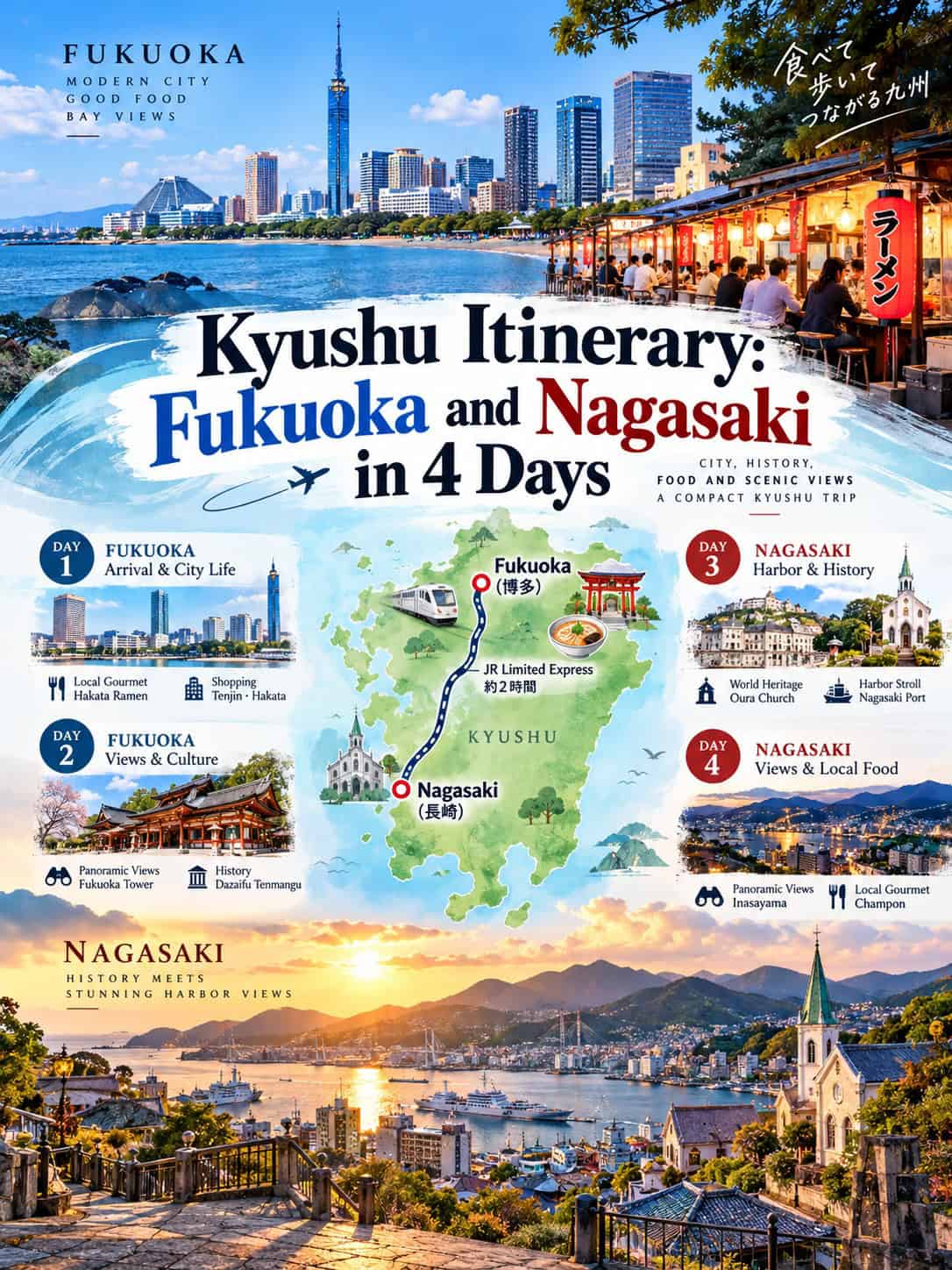
This four-day Kyushu itinerary combines Fukuoka food and city sights with Nagasaki history, hillside views and tram journeys. Spend your first night in Fukuoka and the next two in Nagasaki if you depart from there, or adjust the final day for the return train to Hakata. Plan around the required Takeo-Onsen transfer and the opening hours of museums and gardens.
Kyushu Itinerary: Quick Answer
| Question | Answer |
|---|---|
| How should the 4 days split? | About 1.5 days in Fukuoka and 2–2.5 days in Nagasaki, depending on where you depart on Day 4 |
| Is there a direct bullet train to Nagasaki? | No direct Shinkansen from Hakata to Nagasaki. Transfer from Relay Kamome to the Nishi Kyushu Shinkansen at Takeo-Onsen. |
| Is Dazaifu worth the detour? | Yes. Nishitetsu trains take about 30 minutes from Tenjin with a transfer at Futsukaichi; add time for temple grounds and return travel. |
| Do I need a rail pass? | Usually not for a single Hakata–Nagasaki round trip. The Northern Kyushu pass costs ¥15,000 for 3 days or ¥17,000 for 5 days at regular sales channels; special online prices differ. |
| What should I budget real time for? | Allow roughly 3–5 hours for the museum, Peace Park, hypocentre and memorial hall; this is an itinerary recommendation, not a required duration. |
Kyushu Itinerary: Fukuoka to Nagasaki Transportation
There is no through Shinkansen between Hakata and Nagasaki. The Nishi Kyushu Shinkansen Kamome runs between Takeo-Onsen and Nagasaki, and JR Kyushu directs travellers from Hakata to use the Relay Kamome limited express and transfer across the same platform at Takeo-Onsen. Confirm schedules for your chosen travel date.
The journey typically takes roughly 1 hour 20–30 minutes. A regular adult one-way fare is about ¥6,490, and early online discounts may cost less. Verify the actual fare and reservation requirements in JR Kyushu’s ticket system. The usual rail route transfers at Takeo-Onsen. The Kyushugo highway bus provides a no-transfer alternative from Fukuoka to Nagasaki: the adult fare is ¥2,900 one way and the journey generally takes about 2 hours 10–30 minutes, subject to traffic.
Fukuoka to Nagasaki Train vs Highway Bus: Prices and Time
| Option | One-way adult fare | Typical time | Transfer |
|---|---|---|---|
| Relay Kamome + Kamome | About ¥6,490 regular; discounts vary | About 1h20–1h30 | Across platform at Takeo-Onsen |
| Kyushugo highway bus | ¥2,900; return ¥5,400 | About 2h10–2h30 | No transfer |
| Northern Kyushu Rail Pass, 3-day | ¥15,000 standard / ¥14,000 online | Consecutive validity | Includes eligible JR services |
Kyushugo buses run from Tenjin to Nagasaki Ekimae about 37 times a day each way Monday to Thursday and about 46 times on Fridays, weekends and holidays. Seats are reserved, and a four-ride web coupon brings the price down to ¥2,250 per ride.
Compare Japan train routes and tickets.
Fukuoka has a subway network linking the airport, Hakata and Tenjin. Nishitetsu trains, rather than the Fukuoka City Subway, serve Dazaifu. In Nagasaki, the tram network reaches many central sights; Mount Inasa and some hillside attractions also need a bus, ropeway or longer walk. A Nagasaki tram day pass can save money with several rides, but compare its current price with single fares before you buy. Our Fukuoka travel guide covers the city in more detail.
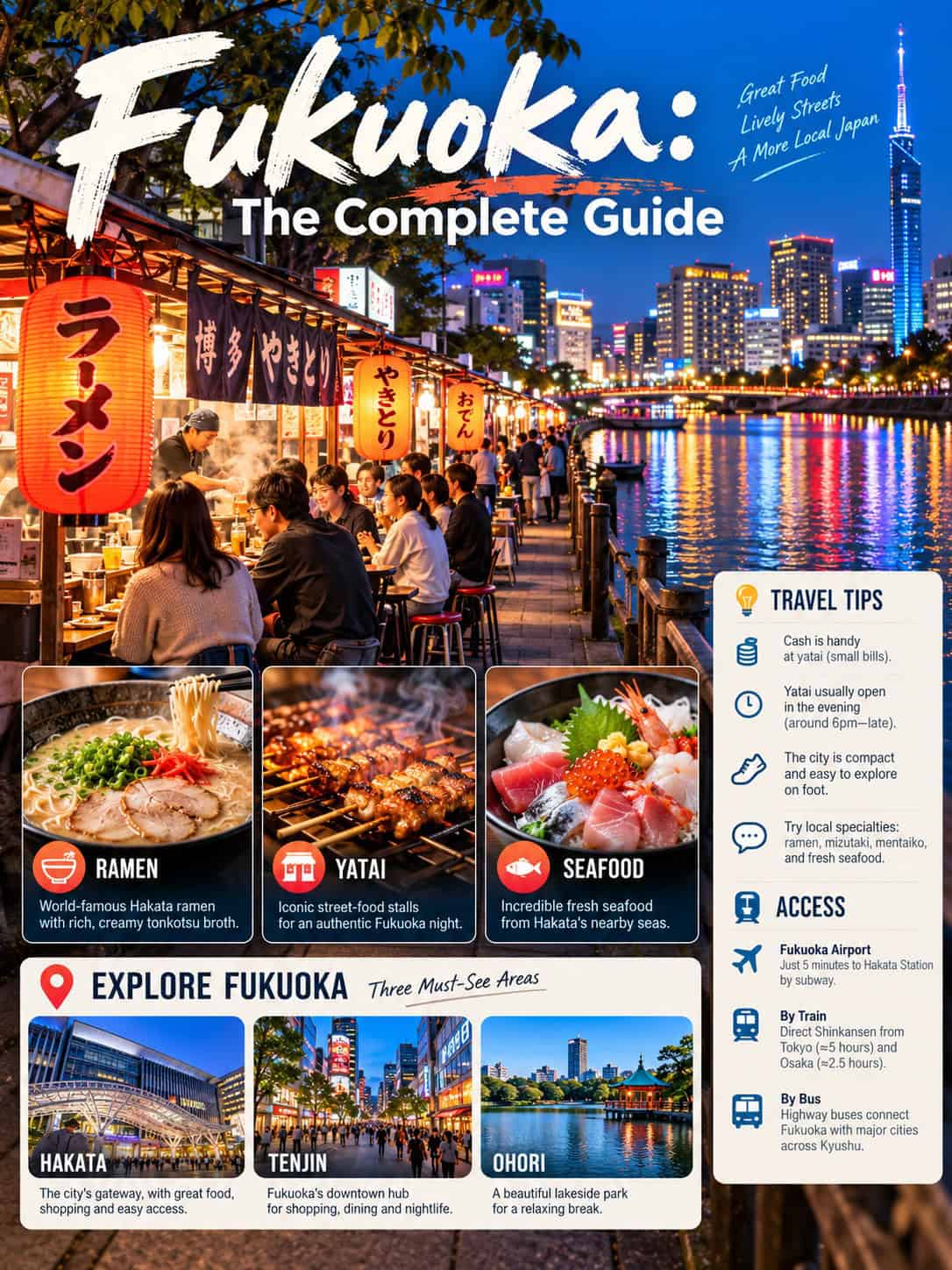
Kyushu Itinerary Day 1: Fukuoka, Hakata and Yatai
Start at Hakata Station, then explore Kushida Shrine, Canal City and nearby old Hakata streets. In the afternoon, visit Ohori Park and the outdoor Fukuoka Castle ruins. The park and castle grounds are generally free, while the Japanese garden and museum attractions may charge admission. Check whether temporary construction affects access.
In the evening, try one of Fukuoka’s licensed yatai stalls around Nakasu, Tenjin or Nagahama. Many yatai seat more than two or three people, but space remains limited. Cash is useful, although payment methods vary by stall. Check opening days and prices before ordering, and allow for closures during bad weather.
Kyushu Itinerary Day 2: Dazaifu and Train to Nagasaki
Leave Fukuoka in the morning and take Nishitetsu via Futsukaichi to Dazaifu. Dazaifu Tenmangu has free shrine entry and seasonal closing hours: 6:30 PM December–March, 7:30 PM June–August and 7 PM in other months. Worship at the front of the main hall resumed in September 2026 after about three and a half years of restoration, so you can now approach the main hall directly. Return to Hakata, collect your luggage and board the Relay Kamome and Kamome connection to Nagasaki. Settle into Nagasaki in the evening and save the sightseeing for the full days ahead. Our Nagasaki travel guide covers the city in more detail.
Dazaifu Tenmangu: Admission and Seasonal Hours
| Item | Details |
|---|---|
| Shrine grounds | Free admission |
| Opening | 6 AM around spring-to-autumn equinox period; 6:30 AM otherwise |
| Closing Dec–Mar | 6:30 PM |
| Closing Apr–May / Sep–Nov | 7 PM |
| Closing Jun–Aug | 7:30 PM |
| Nearby Kyushu National Museum | Separate admission; generally ¥700 Cultural Exchange Exhibition |
Dazaifu’s main hall renovation began in 2023, and a temporary hall was used during the work. At the neighboring Kyushu National Museum, the ¥700 Cultural Exchange Exhibition is free for under-18s and over-70s.
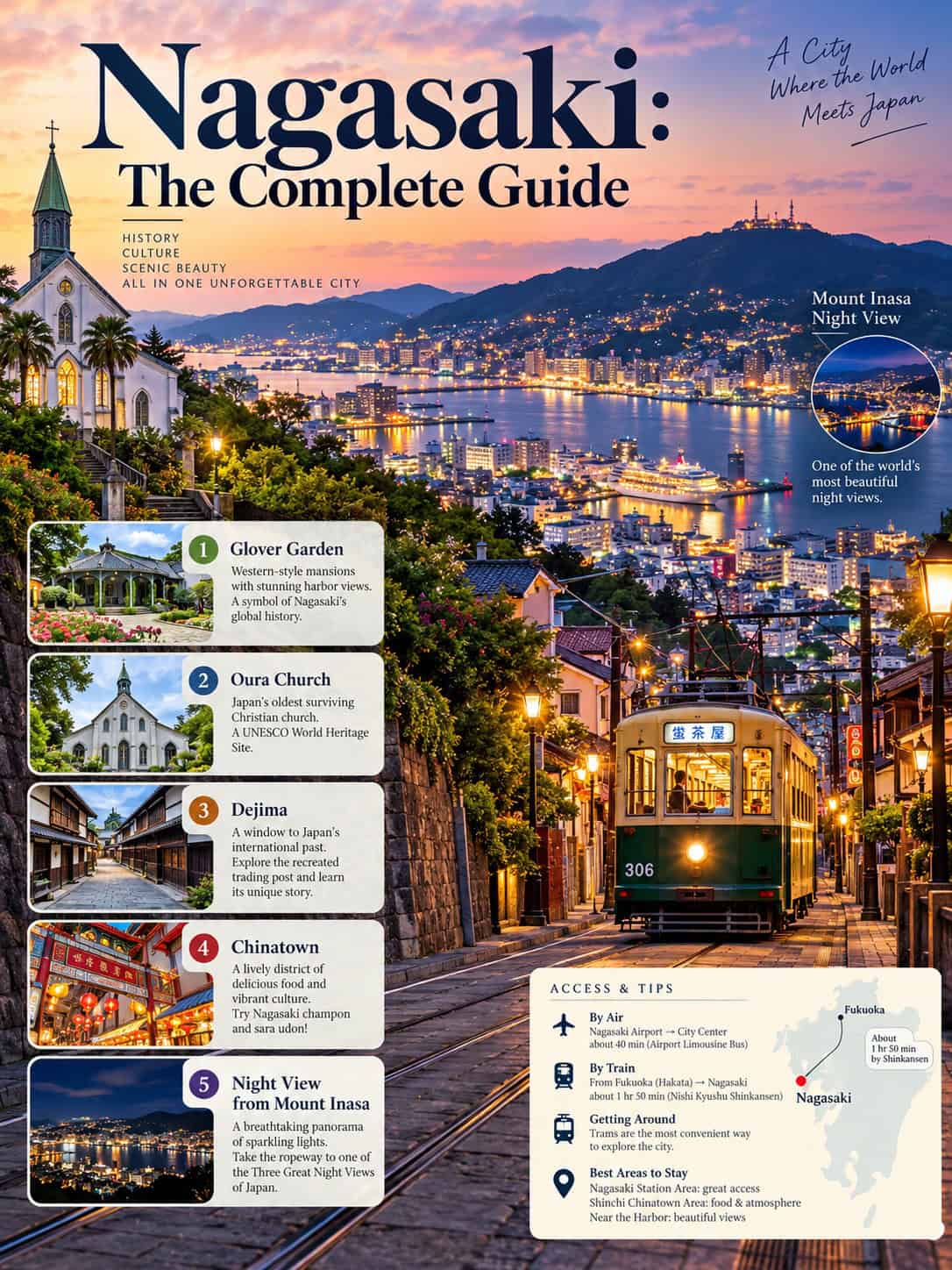
Kyushu Itinerary Day 3: Glover Garden and Chinatown
Explore Glover Garden and Oura Church in the Minamiyamate area. Glover Garden admission is ¥1,300, with regular hours of 8 AM–6 PM and last entry at 5:40 PM. In November and December the garden stays open until 8 PM, with last entry at 7:40 PM, and it returns to 6 PM from January. The garden includes the former Glover residence and relocated Western-style buildings. Oura Cathedral is a separate paid attraction with its own ticket.
For lunch or dinner, visit Shinchi Chinatown for Nagasaki champon or sara udon, two noodle dishes shaped by Chinese culinary influence; our Japanese food guide lists more regional dishes. If time permits, visit Dejima to explore the city’s Dutch trading history.
Nagasaki Itinerary: Glover Garden Tickets and Timing
Oura Cathedral and Dejima charge separately, so do not treat the Glover Garden ticket as a combined historical-district pass. Try this sequence: Glover Garden early, Oura Cathedral next, lunch near Shinchi Chinatown, then Dejima or waterfront walks. The city is hilly, and tram stops do not eliminate every uphill walk. For ramen and yatai stalls, see our Fukuoka food guide.
Browse Nagasaki sightseeing tours and admission tickets.
Kyushu Itinerary Day 4: Atomic Bomb Museum and Peace Park
Nagasaki was struck by an atomic bomb on 9 August 1945. Visit the Atomic Bomb Museum, National Peace Memorial Hall, Hypocentre Park and Peace Park with time to read the exhibitions. These are distinct sites, so plan walking or tram journeys between them rather than treating the sequence as one building. For places to stay, see the best hotels in Nagasaki.
Allow approximately 3–5 hours for the peace-related sites, depending on your interests and breaks. Mount Inasa offers a celebrated night view, but visiting it on Day 4 makes sense only if you are staying overnight or have a sufficiently late departure. If you return to Hakata, allow roughly 90 minutes for the rail journey plus station transfers and onward travel.
Nagasaki Peace Sites: Recommended Visit Order
| Stop | What to see | Suggested time |
|---|---|---|
| Atomic Bomb Museum | Historic photographs, artefacts, testimony | 1–2 hours |
| National Peace Memorial Hall | Quiet remembrance and records | 30–45 minutes |
| Hypocentre Park | Ground zero monument | 15–30 minutes |
| Peace Park | Peace Statue and memorials | 30–60 minutes |
These are suggested durations, not site requirements. Respect memorial visitors and follow photography restrictions. This plan leaves little time for Mount Inasa if you must catch an afternoon or evening departure.
Best Places to Visit in Kyushu Beyond This Four-Day Route
Huis Ten Bosch, a Dutch-themed park near Nagasaki, is a reasonable stop on a longer Kyushu trip but not this one. It is roughly an hour or more away by train from either city, with a steep admission price for what is essentially a theme park rather than core Nagasaki content. Kumamoto, Beppu and the rest of Kyushu are worth seeing on their own trip; on four days, Fukuoka-to-Nagasaki already uses up enough travel time that adding another leg means shortchanging the two cities you came for. For places to stay, see the best hotels in Fukuoka.
Kyushu Itinerary: Is a Rail Pass Worth It?
JR Kyushu lists the Northern Kyushu Rail Pass at ¥15,000 for 3 days or ¥17,000 for 5 days through standard channels, and ¥14,000 and ¥16,000 on its online sales page. A regular Hakata–Nagasaki train return is approximately ¥12,980 at the ¥6,490 fare, so it usually costs less than the standard 3-day pass by itself. Early discount fares may strengthen the case for separate tickets. The pass does not cover Nishitetsu to Dazaifu, city subways or local buses. For nationwide passes, see our Japan Rail Pass guide.
Kyushu 4 Day Itinerary: Practical Cost Comparison
| Cost | Reference adult price |
|---|---|
| Hakata → Nagasaki rail, regular | About ¥6,490 |
| Nagasaki → Hakata rail, regular | About ¥6,490 |
| Train return total | About ¥12,980 |
| Northern Kyushu 3-day pass | ¥15,000 standard / ¥14,000 online |
| Highway bus return | ¥5,400 |
| Glover Garden | ¥1,300 |
| Dazaifu Tenmangu | Free shrine entry |
A 3-day rail pass is useful only if your eligible JR travel occurs within its three consecutive validity days. This itinerary spreads travel across four days, so check whether both intercity legs would fall inside the pass window. Local Nishitetsu trips, trams, hotels, meals and other admissions are extra. If you fly out of Nagasaki rather than return to Fukuoka, buying a 3-day pass for one intercity ride is even less likely to save money.
Kyushu Travel Itinerary: Where to Sleep and How to Depart
Night 1: Stay near Hakata or Tenjin in Fukuoka. Hakata suits the Day 2 intercity departure; Tenjin has dining and nightlife.
Nights 2–3: Stay in Nagasaki near its station or a central tram corridor. The hilly topography makes hotel location important if you carry suitcases.
Day 4 departure: If your flight leaves from Fukuoka, allocate the full return train and airport connection. If you fly from Nagasaki, you can spend longer at the Peace Park and museum.
Compare Japan flight routes and airport transfer options for your departure city. Japan mobile data plans may help with regional rail navigation and changes.
Kyushu Itinerary: Frequently Asked Questions
Is there a direct bullet train from Fukuoka to Nagasaki?
No. There is no through Shinkansen between Hakata and Nagasaki. Take the Relay Kamome limited express to Takeo-Onsen and transfer across the platform to the Nishi Kyushu Shinkansen Kamome.
How long is the Fukuoka to Nagasaki train?
Relay Kamome plus Nishi Kyushu Shinkansen usually takes around 1 hour 20–30 minutes, including a transfer across the platform at Takeo-Onsen.
How much is the Fukuoka to Nagasaki train?
A regular one-way adult fare is about ¥6,490, while advance discount tickets may cost less. Confirm your travel date with JR Kyushu.
How should I split 4 days between the two cities?
Plan about 1.5 days in Fukuoka and the remainder in Nagasaki. If you must return to Fukuoka on Day 4, reduce the final afternoon programme and skip Mount Inasa after dark.
Is Dazaifu worth fitting into this trip?
Yes. Nishitetsu trains take about 30 minutes from Tenjin with a transfer at Futsukaichi, so it fits into a half-day before the train to Nagasaki.
Is Dazaifu Tenmangu free?
Yes. The shrine grounds have free admission. Nearby museums and special facilities may charge separately.
Do I need to book a table at a yatai stall in Fukuoka?
Most yatai welcome walk-ins and have limited seats, but capacity, reservation rules and payment methods depend on the individual stall. Check the menu and price before ordering.
How much does Glover Garden cost?
Adult admission is ¥1,300, usually 8 AM–6 PM with last entry at 5:40 PM. In November and December the garden is open until 8 PM, with last entry at 7:40 PM.
How much time should I budget for the Atomic Bomb Museum and Peace Park?
Plan approximately 3–5 hours if visiting the museum, hypocentre, memorial hall and Peace Park. Allow extra time if you read exhibits in detail.
Can you do Nagasaki as a day trip from Fukuoka?
Yes, especially for the Atomic Bomb Museum and Peace Park, but an overnight stay gives you time for Glover Garden, Chinatown and the Mount Inasa night view.
Should I stay two nights in Nagasaki?
Two nights make this four-day plan more manageable and help you fit the historical district and peace sites into separate days.
Is four days enough for Kyushu?
Four days is enough for Fukuoka and Nagasaki, not the whole island. Add more days for Beppu, Kumamoto, Aso or Kagoshima.
Should I visit Huis Ten Bosch on this trip?
Probably not on a four-day trip. It is a meaningful detour from either city, and the time is better spent on Fukuoka and Nagasaki.
Do I need a Kyushu rail pass for this trip?
Usually not for one Hakata–Nagasaki return: a regular rail return is about ¥12,980, versus the Northern Kyushu Pass at ¥15,000 standard or ¥14,000 online for 3 days. Calculate your full route before purchasing.
Does the JR Kyushu Rail Pass cover Dazaifu?
No. Dazaifu is served by Nishitetsu Railway, which the JR Kyushu pass does not cover.
What is Nagasaki’s historical connection to Chinese and Dutch traders?
During the Edo-period seclusion policy, Nagasaki was the main gateway for Dutch and Chinese trade, centred on the artificial island of Dejima where Dutch traders were based. The city also developed a long-standing Chinese community and Chinatown, which is linked to its champon noodle dish.
Kyushu Itinerary: Best Route Summary
This Kyushu itinerary works for four days if you concentrate on Fukuoka and Nagasaki rather than trying to add Beppu or Kumamoto. Use the Relay Kamome and Kamome connection via Takeo-Onsen, visit Dazaifu on the second morning, and give Nagasaki’s peace-related sites a substantial half-day. Choose an evening Mount Inasa trip only when your departure schedule allows it.