By Nippon With Me EditorialPublished Updated
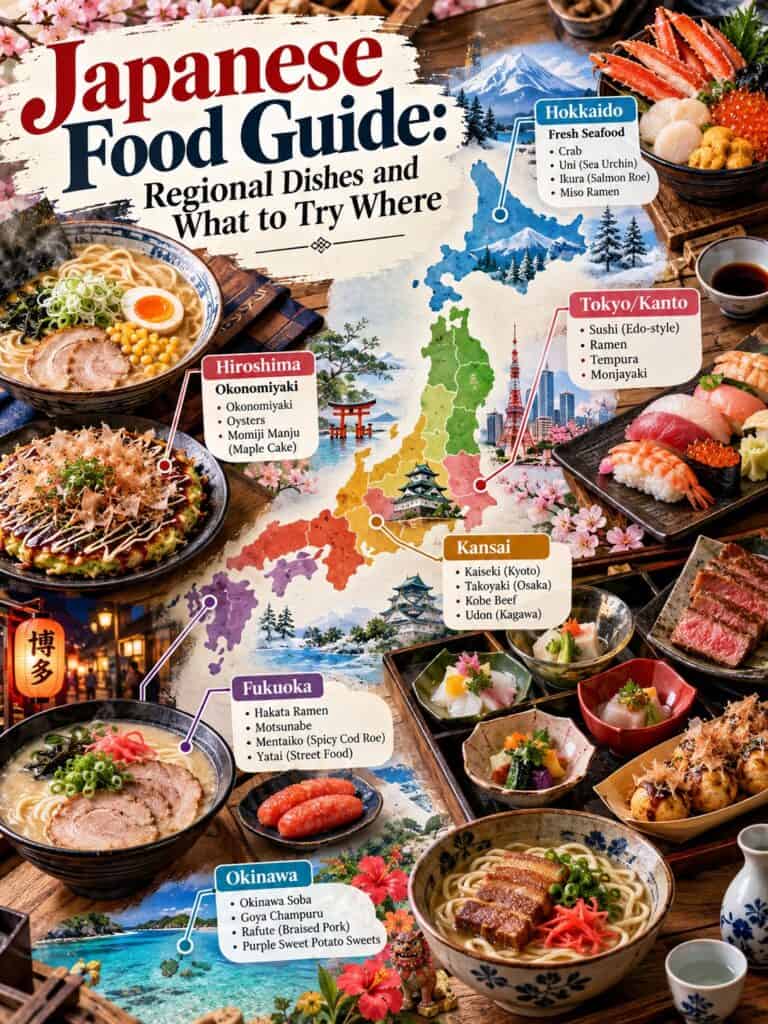
Japanese food changes from region to region far more than most first-time visitors expect. If you are wondering what to eat in Japan, the short answer is: whatever the place you are standing in is known for. Sapporo is the home of miso ramen, Hiroshima layers its okonomiyaki over noodles, Fukuoka built a creamy pork-bone ramen, and Okinawa cooks in a tradition that is distinct from the mainland. Eating Japanese food by region, rather than just by restaurant, is one of the most rewarding ways to understand the country.
What to Eat in Japan by Region
| Region | Signature dishes | Best place to try them |
|---|---|---|
| Hokkaido | Miso ramen, uni-don, jingisukan (grilled lamb), dairy and soft serve | Sapporo and Hokkaido’s coasts |
| Tohoku | Wanko soba, gyutan (beef tongue), kiritanpo nabe, Kitakata ramen | Morioka, Sendai, Akita, Kitakata |
| Kanto and Tokai (Nagoya) | Edomae sushi, monjayaki, hitsumabushi, misokatsu | Tokyo and Nagoya |
| Kansai | Takoyaki, okonomiyaki, yudofu, shojin ryori | Osaka and Kyoto |
| Hiroshima | Layered okonomiyaki on yakisoba | Hiroshima |
| Kyushu | Hakata tonkotsu ramen, motsunabe, mentaiko, Nagasaki champon | Fukuoka and Nagasaki |
| Okinawa | Okinawa soba, goya champuru, rafute, taco rice | Naha and the main island |
This guide stays regional on purpose. For restaurants, see our Tokyo food guide, Osaka street food guide and Fukuoka food guide.
Why Japanese Food Varies So Much by Region
One of the biggest drivers of regional difference is dashi, the stock that underlies much of Japanese cooking, and it is often described as splitting along an east-west line. Kansai cities such as Kyoto and Osaka built their cuisine around kelp (kombu) dashi, helped by kelp shipped south from Hokkaido along historic trading routes. Edo, which became Tokyo, is associated with a bonito-based tradition, with stronger, soy-sauce-forward flavors. Explanations for the split, including water chemistry and transport routes, are common, but the details are debated, so treat them as a general pattern rather than a hard rule. Miso follows a similar pattern, with regional differences in rice, barley and soybean ratios that produce different colors and flavors.
On top of that, coastal regions built their food around fish and seafood, while inland and mountain regions built theirs around local produce, preserved vegetables and game. History also left its mark, from trade contact that introduced new ingredients to postwar food shortages that gave rise to entirely new dishes.
Hokkaido Japanese Food: Seafood, Dairy and Grilled Lamb
Hokkaido’s cold northern waters make it Japan’s seafood powerhouse. Uni-don, sea urchin over rice, is a highlight, with salmon roe a common companion topping. The island is also known for dairy and soft-serve ice cream, and for jingisukan, lamb grilled at the table on a domed pan, especially popular in the colder months. Sapporo is the birthplace of miso ramen, one of Japan’s best-known regional noodle styles (see the ramen comparison below), and our Hokkaido guide covers the wider trip.
Tohoku: Noodles, Beef Tongue and Mountain Cooking
Tohoku has some of the country’s most distinctive and least internationally known specialties:
- Wanko soba (Iwate): buckwheat noodles served in a continuous stream of small refilled bowls until the diner signals they have had enough.
- Gyutan (Sendai, Miyagi): grilled beef tongue, usually thinly sliced and charred.
- Kiritanpo nabe (Akita): rice pressed onto cedar sticks, grilled, then added to a hot pot.
- Kitakata ramen (Fukushima): broad, hand-cut, rippled noodles in a clear soy-sauce broth.
Kanto and Nagoya: Edo-Style Sushi and Hitsumabushi
Tokyo’s food identity traces back to Edo-period street food. Edomae, or Edo-style, sushi developed in the early 19th century as a fast way to eat fish that was preserved by salting, vinegar-pickling or marinating, and it is a direct ancestor of the sushi served today. Monjayaki, a runny pan-fried batter dish with cabbage and small seafood, is a Tokyo specialty with a dedicated street in the Tsukishima neighborhood. Further west in Nagoya, in the Tokai area rather than Kanto, the standout dish is hitsumabushi, grilled eel over rice served in a wooden bowl called an ohitsu. It is traditionally eaten three different ways: plain first, then with spring onion, dried seaweed and wasabi, and finally with hot broth poured over what is left. The other Nagoya favorite is misokatsu, a pork cutlet finished with sweet miso sauce. See our Nagoya guide for more.
Kansai Japanese Food: Takoyaki, Okonomiyaki and Kyoto’s Temple Cuisine
Osaka earns its reputation as one of Japan’s best food cities through casual, high-energy dishes: takoyaki, grilled octopus balls topped with a Worcestershire-style sauce, mayonnaise and bonito flakes, and okonomiyaki, whose name roughly means “grilled as you like it”, reflecting its mixed-batter, anything-goes approach. Kyoto runs in the opposite direction, built around yudofu, simmered tofu served simply in dashi, which ties into shojin ryori, the Buddhist vegetarian temple cuisine that avoids meat and strong flavors. Both cities draw on the kelp-forward, lighter dashi tradition, which is part of why Kansai food often tastes less heavily seasoned with soy sauce. See our Osaka guide and Kyoto guide.
Hiroshima Style Okonomiyaki Is Not Osaka’s Okonomiyaki
This is one of the most commonly misunderstood regional distinctions in Japanese food. Osaka-style okonomiyaki mixes flour, egg, dashi, cabbage and your choice of protein into a single batter and cooks it as one pancake. Hiroshima-style okonomiyaki is built by layering: a thin layer of batter is cooked on the griddle, piled with cabbage and other toppings, then flipped onto a bed of yakisoba noodles cooked until crispy, giving a more textured result where each layer stays distinct. If you order okonomiyaki in Hiroshima expecting Osaka’s version, you will get something different, and many locals take pride in the distinction. Our Hiroshima and Miyajima guide covers the city.
Kyushu Japanese Food: Tonkotsu Ramen and Motsunabe
Fukuoka is the center of Hakata-style tonkotsu ramen, a rich, creamy broth made by simmering pork bones until the collagen breaks down, paired with thin, firm noodles and the regional practice of kaedama, ordering a noodle refill for the broth you have not finished. Motsunabe, an offal hot pot with cabbage and chives in a soy- or miso-based broth, is a Fukuoka specialty, often finished by cooking rice or noodles in the leftover broth. Mentaiko, spiced pollock roe, appears throughout the region. Further south, Nagasaki’s champon, a noodle dish with pork, seafood and vegetables in a rich broth that varies by restaurant, reflects the city’s history as a center of Chinese trading influence; see our Nagasaki guide.
Okinawan Food: A Genuinely Different Tradition
Okinawan food stands apart from the rest of Japan more than any other regional cuisine, a legacy of the Ryukyu Kingdom’s centuries of trade with China and other countries, and later of the American presence. Okinawa soba, despite the name, is made with wheat flour rather than buckwheat, served in a pork-enriched broth often topped with braised pork belly or ribs. Goya champuru, a stir-fry of bitter melon, egg and tofu, is a defining everyday dish, and rafute, pork belly slow-braised with awamori (the local spirit) and sugar, appears at celebrations. Taco rice, seasoned ground beef served over rice instead of in a tortilla, is a more recent creation that grew up around American military bases on the island; accounts of exactly where and when it started vary, with the town of Kin often credited. See our Okinawa guide.
More Regional Japanese Dishes at a Glance
Beyond the headline dishes above, these are regional specialties worth looking for on a local menu.
| Dish | Where | What it is |
|---|---|---|
| Ishikari nabe | Hokkaido | Salmon hot pot in a miso broth with onion, cabbage, leeks and mushrooms; salmon roe is optional |
| Sasakamaboko | Sendai, Miyagi | Steamed fish paste |
| Fukagawa meshi | Tokyo | Rice topped with shelled clams, leek and miso |
| Hotaruika | Toyama | Firefly squid |
| Jibu-ni | Kanazawa, Ishikawa | A soup of wild duck and traditional vegetables |
| Koyadofu | Wakayama | Freeze-dried tofu |
| Sanuki udon | Kagawa | The local style of thick wheat udon noodles |
| Mizutaki | Fukuoka | Boiled chicken hot pot |
| Hiyajiru | Miyazaki | A chilled fish and miso soup poured over a bowl of hot rice |
| Somen | Miwa (Nara), Shodoshima (Kagawa) and Banshu (Hyogo) are the prized varieties | Thin hand-stretched wheat noodles, usually served chilled with a dipping sauce or hot in a soup called nyumen |
Regional Specialties Beyond the Main Regions
Many specialties are sold mostly in their home prefectures and can be hard to find in big cities, so they are worth planning a stop around.
| Dish | Where | What it is |
|---|---|---|
| Soup curry | Hokkaido (Sapporo is the best-known home) | A spiced curry broth with large pieces of meat and vegetables, rice served on the side |
| Namero | Chiba | A fisherman’s dish of minced raw fish mixed with miso and aromatics such as ginger and green onion |
| Hoto | Yamanashi | Wide, flat, udon-like noodles stewed with vegetables in a miso-based broth |
| Funazushi | Shiga | Carp pickled and matured for more than six months, with a cheese-like texture; an acquired taste |
| Hiroshima oysters | Hiroshima | Oysters, the prefecture’s other signature food next to okonomiyaki, best in the colder months |
| Fugu | Yamaguchi | Pufferfish, served only by chefs licensed to prepare it |
| Katsuo (bonito) | Kochi, Shikoku | Bonito prepared in several ways, best known seared as katsuo no tataki |
Japanese Ramen Types: Regional Styles Side by Side
Ramen is the easiest way to taste regional Japanese food, since the major styles are widely available even outside their home cities.
| Style | Home | Broth | Noodles | Typical toppings |
|---|---|---|---|---|
| Sapporo miso | Sapporo, Hokkaido | Pork-based stock with miso fried with ginger and garlic | Thick, curly | Corn, butter, bean sprouts |
| Hakata tonkotsu | Fukuoka, Kyushu | Rich, creamy pork-bone broth | Thin, straight, firm | Pickled ginger, sesame, chashu |
| Tokyo shoyu | Tokyo | Soy sauce with chicken and dried-fish stock | Medium, wavy | Nori, menma, narutomaki |
| Kitakata | Kitakata, Fukushima | Clear soy-sauce broth | Broad, rippled, hand-cut | Chashu, green onion |
None of these is the best ramen; they are genuinely different dishes that share a name.
Japanese Food by Season
| Season | What to look for |
|---|---|
| Winter | Oden (vegetables, fishcakes and hard-boiled egg simmered in dashi, sold at convenience stores and street stalls), nabe hot pots such as chanko nabe, Ishikari nabe and sukiyaki, and snow crab, which is in season in January in parts of Hokkaido and along the Sea of Japan coast |
| Spring | Takenoko gohan, bamboo shoots cooked over seasoned rice when the first shoots appear |
| Summer | Chilled somen noodles, unaju (grilled eel over rice in a lacquer box) and kakigori shaved ice with toppings such as red bean paste or condensed milk |
| Autumn | Matsutake mushrooms, grilled or served over rice |
Oden is simmered in dashi and chanko nabe has a dashi base, so neither suits vegetarians. Sukiyaki is thin beef, green onions, mushrooms and tofu cooked in a sweetened broth, with the cooked meat dipped in raw egg; the Kanto style simmers everything together, while the Kansai style cooks the beef first. Shabu-shabu is named after the sound of thin slices of meat swished in the broth, and is served with dipping sauces such as ponzu.
Eating Out: Japanese Food Etiquette That Is Useful to Know
- Ticket machines: many ramen shops use a machine at the entrance. You choose and pay first, then hand the ticket to staff.
- No tipping: tipping is not part of dining in Japan. The usual thing to say on your way out is gochisosama deshita, roughly “thank you for the meal”.
- Slurping noodles is normal and not considered rude.
- Otoshi: at some izakaya, a small starter appears shortly after you sit down and is billed as a seating charge. The charge is usually printed on the menu or a sign, so ask staff if you are unsure.
- Conveyor-belt sushi: take one plate at a time, and stack finished plates at your seat.
- Cash: some small restaurants and cafes accept cash only, so keep yen on hand for local places.
- Reservations: if you book a small restaurant, arrive on time or cancel well ahead. Some prepare ingredients for each booking, so a no-show wastes food.
How to Order at a Ramen Shop with a Ticket Machine
Most ramen shops take payment up front through a ticket machine (kenbaiki) by the door. Insert money, press the buttons for your ramen, drinks and sides, take your change and the printed ticket, hand the ticket to staff, then sit and wait. Some shops take orders from staff instead. A line outside is often a sign of a good shop, finishing the soup is optional, and with people waiting it is polite not to linger over the bowl.
Sushi, Standing Bars and Izakaya
Conveyor-belt sushi plates typically start at ¥100, and the plate color shows the price. Take what you want from the belt and never put a plate back; green tea is usually self-service. At a counter you can order straight from the chef. Omakase (chef’s choice) is the most expensive style of sushi dining, and popular counters need a reservation, because walking in without one tends to be difficult.
Standing bars (tachinomi) have short menus, often handwritten or in Japanese only. Owners and other customers usually help, and a translation app fills the gaps. The bars are tiny, so pass empty dishes back to the server and keep your voice down; no tip is expected. Golden Gai in Shinjuku, Noge in Yokohama, Ura Namba in Osaka and Susukino in Sapporo are well-known places to try one.
At an izakaya, call a server with “sumimasen” or the table call button. Dishes are shared, and people keep ordering as the night goes on. Besides the otoshi, some izakaya add a late-night surcharge. In any restaurant, let staff know you have arrived before you take a seat.
For more manners, see our guide to Japanese etiquette for tourists.
Vegetarian Food in Japan and Japanese Food Dietary Restrictions
Eating vegetarian in Japan takes planning, especially in smaller towns, and eating vegan is harder. The main obstacle is dashi, usually made from bonito flakes or dried sardines (kombu-only dashi exists, but you cannot assume it), which turns up in miso soup, simmered vegetables, tempura dipping sauce and noodle broths that otherwise look meat-free. Staff sometimes do not mention it because they treat it as seasoning rather than fish, so ask about dashi specifically and separately from asking about meat.
Asking for “vegetarian” alone is often not enough. A request such as “no meat, no seafood and no animal products, including dashi or other stocks” works better, and “no meat” should be spelled out to include chicken, pork and fish. Mention restrictions when you book, especially for set menus, and carry a written note in Japanese.
Easier choices include pickles (tsukemono), plain tofu without bonito flakes, kappa maki (cucumber rolls) and takuan maki (pickled radish rolls). Many convenience-store onigiri contain fish, but umeboshi (pickled plum) and kombu fillings are usually available. Okonomiyaki can be made vegetarian but never vegan, because the batter contains egg. Rural ryokan can usually prepare vegetarian meals if you contact them in advance.
Watch for these hidden ingredients:
- Fish dashi in miso soup, noodle broths, simmered dishes and tempura sauce.
- Bonito flakes on top of cold tofu, okonomiyaki and takoyaki.
- Pork or animal fat in ramen broths and some fried rice.
- Gelatin in some desserts and jellies.
- Wheat in soy sauce and some miso, which matters for gluten-free travelers.
Shojin ryori, Kyoto’s Buddhist temple cuisine, is traditionally vegan and leaves out garlic and onion, though some places include dairy, so ask when booking. You will find it almost only in Buddhist temples and temple lodgings (shukubo). Awareness has grown, particularly in big cities, and more restaurants will adjust a dish on request if you ask clearly and ideally in advance.
Halal travelers have more options than before: certified products and restaurants exist across Japan, and Halal Gourmet Japan lists halal restaurants. There is no single national halal accreditation body, so ask which certifier a restaurant uses; the Halal Japan Business Association and the Japan Muslim Association are two of them. Kosher is much harder, because almost no restaurants in Japan specialize in it.
Alcohol is the hidden issue for halal diners: cooking sake and mirin go into many Japanese dishes, some miso contains alcohol unless the label says mu-ten-ka (無添加, additive-free), and gelatin or animal fat turns up in breads, snacks and sweets. Even a restaurant that calls itself halal-friendly may not use a separate halal-only kitchen, and ordinary supermarkets rarely stock halal products.
For allergies, tell the restaurant in advance. Staff will either accommodate the request or point you to a place that can, but kitchens can be rigid about changing a dish once it is ordered.
Frequently Asked Questions About Japanese Food
What should I eat in Japan?
Eat what each region is known for: miso ramen in Sapporo, okonomiyaki in Osaka and Hiroshima, tonkotsu ramen in Fukuoka, hitsumabushi in Nagoya and goya champuru in Okinawa.
Why does Japanese food taste different from region to region?
Mostly because of dashi and local ingredients. Kansai cooking is built on kelp dashi, while Kanto developed a bonito-based tradition, and local produce, coastlines and history shaped the rest.
Is Hiroshima okonomiyaki different from Osaka’s?
Yes. Osaka mixes everything into one batter and cooks it as a single pancake. Hiroshima layers the ingredients over a base of yakisoba noodles.
What are the main Japanese ramen types?
Sapporo miso, Hakata tonkotsu, Tokyo shoyu and Kitakata are among the best known, and each has its own broth and noodle style.
What is distinct about Okinawan food?
It developed separately through the Ryukyu Kingdom’s trade with China and other countries. Dishes such as goya champuru and wheat-based Okinawa soba differ from mainland Japanese food.
Do I need to tip at restaurants in Japan?
No. Tipping is not practiced in Japan. Some izakaya add a small seating charge called otoshi, which is a fixed fee, not a tip.
Is slurping noodles polite in Japan?
Yes. Slurping ramen, soba and udon is normal and not considered rude.
How hard is it to eat vegetarian or vegan in Japan?
Vegetarian is manageable with planning, especially in big cities. Vegan is harder, mainly because fish-based dashi appears in many dishes that look meat-free.
What should I know about conveyor-belt sushi etiquette?
Take one plate at a time, eat what you take, and stack finished plates at your seat rather than returning them to the belt.
Bottom Line
Japanese food is really dozens of regional traditions shaped by local dashi, local ingredients and centuries of trade and history. Chasing those regional differences, rather than assuming Tokyo’s version of a dish is the definitive one, is one of the most rewarding ways to eat your way across the country.