By Nippon With Me EditorialPublished Updated
The best things to do in Tokyo range from dawn temple visits to rooftop city views and late-night alleys, and this Tokyo travel guide covers what actually matters for a first visit: which neighborhoods to base yourself in, which sights are worth the trip, how to get in from the airport, and when to go. Tokyo is less a single city than a cluster of distinct downtowns stitched together by one of the world’s best train networks, and the trick is knowing which pieces to see and how they connect.
Best Things to Do in Tokyo at a Glance
If you only have a short stay, start with these. Times are rough planning guides for a relaxed visit.
| Sight | What it is | Plan on |
|---|---|---|
| Senso-ji and Nakamise-dori | Tokyo’s oldest temple and its souvenir street, in Asakusa | 2 hours |
| Meiji Shrine | Forested Shinto shrine next to Harajuku, free to enter | 1.5 hours |
| Shibuya Crossing and Shibuya Sky | The famous scramble crossing and a rooftop deck above it | 2 hours |
| Tokyo Skytree | Japan’s tallest structure, with observation decks | 1.5 hours |
| teamLab Planets | Walk-through digital art in Toyosu, partly barefoot and in water | 2 to 3 hours |
| teamLab Borderless | Digital art museum in Azabudai Hills | 2 to 3 hours |
| Tsukiji Outer Market | Sushi breakfasts and street-food stalls | 1.5 hours |
| Ueno Park museums | Tokyo National Museum, other museums and Ueno Zoo | Half to full day |
| Shinjuku at night | Neon streets, Omoide Yokocho alleys and the free city-hall observation deck | 3 hours |
| Harajuku and Omotesando | Youth fashion on Takeshita Street, high-end architecture on the avenue | 2 hours |
Tokyo Tourist Attractions by Neighborhood
Tokyo’s 23 wards each have their own identity, and most visitors only need to know a handful of them well.
Shinjuku
Tokyo’s busiest transit hub and one of its most visually overwhelming districts: neon-lit skyscrapers, the bar-crammed alleys of Kabukicho and Omoide Yokocho, and the free observation deck at the Tokyo Metropolitan Government Building. Shinjuku Gyoen, one of Tokyo’s best gardens, sits a short walk from the station chaos.
Shibuya
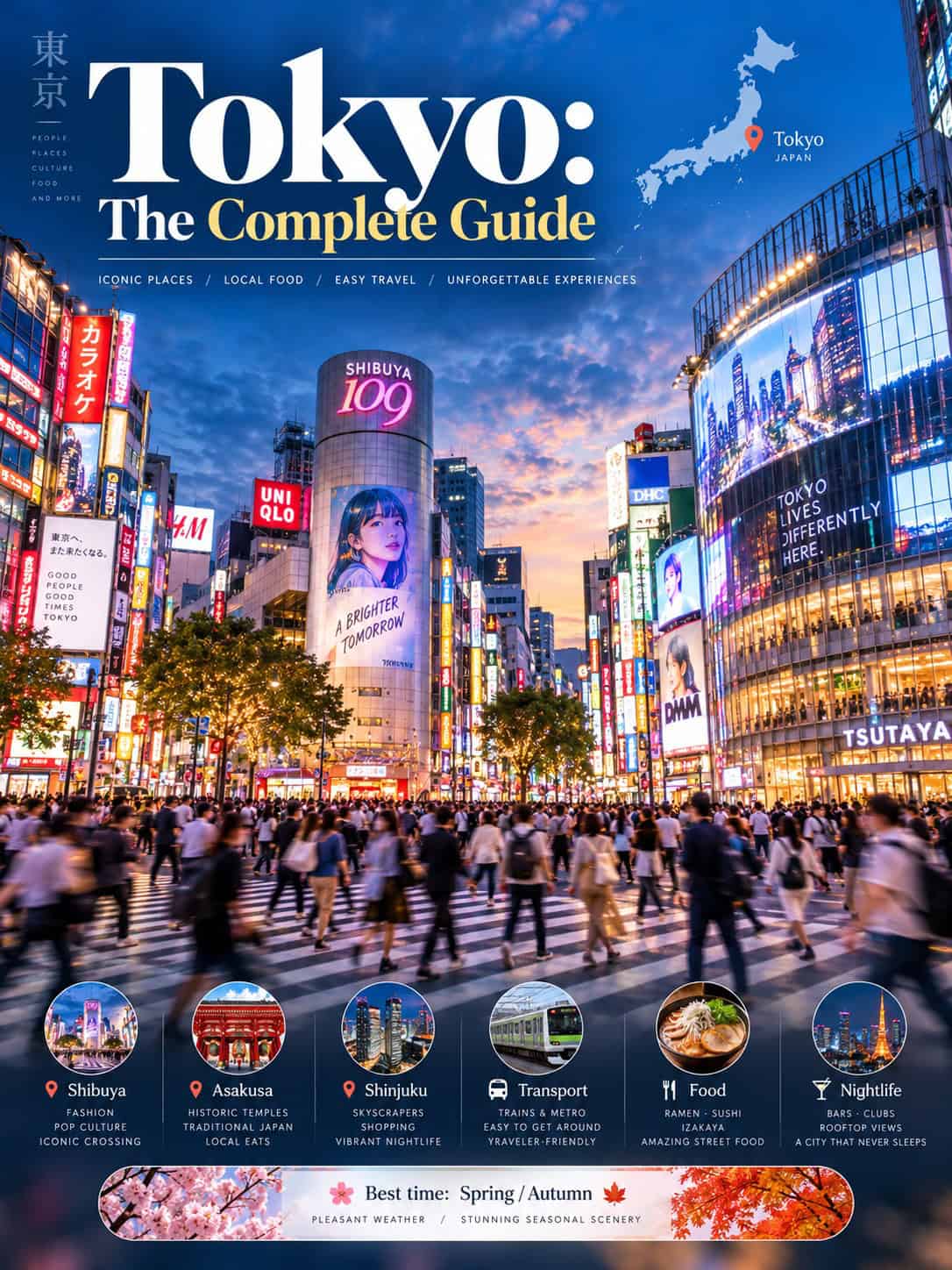
Home to the famous Shibuya Crossing, where crowds cross from every direction at once when the lights change. Shibuya skews younger and trend-driven, and the rooftop deck at Shibuya Sky looks straight down on the crossing.
Asakusa
Tokyo’s best base for old-city atmosphere, anchored by Senso-ji, the city’s oldest and most visited Buddhist temple. The approach along Nakamise-dori, lined with stalls selling snacks and souvenirs, is as much a part of the experience as the temple itself.
Ginza
Tokyo’s upscale shopping and dining district, built around department stores, flagship boutiques and some of the city’s most decorated restaurants. Several main streets close to car traffic on weekend afternoons, turning Ginza into a pedestrian promenade.
Akihabara
The center of Tokyo’s electronics, anime and manga culture, with multi-floor stores for retro games and idol merchandise alongside serious camera and PC-parts retailers.
Harajuku and Omotesando
Two adjoining districts with opposite personalities: Harajuku’s Takeshita Street is loud, youth-fashion-driven and crepe-stall-dense, while the tree-lined Omotesando avenue is lined with high-end flagship architecture.
Ueno
Built around Ueno Park, home to the Tokyo National Museum, Ueno Zoo and the city’s best concentration of museums in one walkable area, which makes it a good rainy-day base.
Odaiba, Toyosu and Azabudai Hills
Odaiba is Tokyo’s waterfront entertainment district on reclaimed land in Tokyo Bay, with views toward the Rainbow Bridge. teamLab’s two flagship digital art museums are in different places: teamLab Planets is in Toyosu, right by Shin-Toyosu Station on the Yurikamome Line, while teamLab Borderless reopened in February 2024 at Azabudai Hills, a mixed-use development on the mainland near Kamiyacho Station. Borderless no longer operates in Odaiba, so double-check the address before you set off.
Top Things to Do in Tokyo
Senso-ji and Asakusa
Tokyo’s oldest temple, with origins in the 7th century (the current buildings are postwar reconstructions). Admission is free. Go early in the morning to see Nakamise-dori before the tour groups arrive, and check the main hall’s opening hours before you plan your day.
Meiji Shrine
A Shinto shrine dedicated to Emperor Meiji, set inside a dense forested park near Harajuku that feels disconnected from the city around it. Entry to the grounds is free, which makes it one of Tokyo’s best zero-cost half-day stops, and it pairs naturally with a walk through Harajuku afterward.
Shibuya Crossing and Shibuya Sky
The crossing itself costs nothing to watch from street level, but the rooftop observation deck at Shibuya Sky (timed-entry tickets, best booked in advance, especially for sunset slots) gives the best elevated view of the spectacle below. Online adult tickets cost ¥2,700 for entry before 3 p.m. and ¥3,400 from 3 p.m.; counter tickets, when any are left, cost ¥3,000 and ¥3,700, and an adult slot that is sold out online is not sold at the counter either. The deck is open from 10 a.m. to 10:30 p.m. (last admission 9:20 p.m.), and the rooftop can close in bad weather or strong winds, with no refund once you have entered.
Tokyo Skytree
At 634 meters, Tokyo Skytree is the tallest structure in Japan, with the lower Tembo Deck at 350 meters and a higher gallery above it. Book tickets in advance online, since walk-up tickets can cost more or sell out, and check the current prices and hours on the official site. Online adult tickets start at ¥1,800 for the 350-meter Tembo Deck and at ¥3,000 for the Deck plus Tembo Galleria combination (450 meters), with the exact price depending on the date; tickets bought at the 4th-floor counter or a ticket machine carry a ¥500 service fee each.
teamLab Planets and teamLab Borderless
Japan’s most famous digital art experiences are two separate venues, so pick based on location and style. teamLab Planets in Toyosu is a fixed walkthrough of large installations, and some rooms involve wading through shallow water, so wear clothes that can get wet and expect to go barefoot. At times the water is knee-deep, so shorts or pants that roll up past the knee are the practical choice. General admission to teamLab Planets starts at ¥3,800 for adults aged 18 and over, and the price depends on the date and time slot. teamLab Borderless in Azabudai Hills is a museum where artworks move between rooms. Both use timed entry that can sell out, so book ahead for weekends.
Tsukiji Outer Market
The wholesale tuna auctions moved to Toyosu Market in 2018, but Tsukiji’s outer market stalls stayed in place and remain one of Tokyo’s best places for a sushi breakfast or street-food grazing crawl, generally busiest and freshest early in the morning. For more on what to eat, see our Tokyo food guide from conveyor-belt sushi to Michelin stars.
Ueno Park Museums
The Tokyo National Museum holds the country’s largest collection of Japanese art and antiquities and sits a short walk from several other museums and Ueno Zoo within the same park. Realistically it is a full day if visited properly.
Opening Days and Admission Prices for the Main Sights
Closing days shape a Tokyo plan more than ticket prices do. The Tokyo National Museum, Ueno Zoo and Shinjuku Gyoen all close on Mondays; when a Monday is a national holiday they stay open that day and close the next one instead. Tsukiji Outer Market closes on Wednesdays, Sundays and national holidays, and its busiest, liveliest hours run from about 9 a.m. to 1 p.m., so most shops are shut by the evening. In the three-day template below, Day 1 includes an Ueno afternoon, so on a Monday run Day 2 first and keep Ueno for another day.
| Sight | Adult admission | Hours | Closed | Good to know |
|---|---|---|---|---|
| Tokyo National Museum | ¥1,000 | 9:30 a.m. to 5 p.m., until 8 p.m. on Fridays and Saturdays; last entry 30 minutes before closing | Mondays | University students ¥500; free for anyone under 18 or over 70 with proof of age; personal photos are allowed without flash or tripods except where signs say no |
| Ueno Zoo | ¥600 | 9:30 a.m. to 5 p.m.; last entry 60 minutes before closing | Mondays | Five minutes on foot from the Park Exit of Ueno Station |
| Shinjuku Gyoen | ¥500 | 9 a.m. to 4:30 p.m. from October to mid-March and to 6 p.m. from mid-March to September (later in midsummer); last entry 30 minutes before closing | Mondays | Alcohol is not allowed, and sports equipment and musical instruments are restricted |
| teamLab Borderless | From ¥3,800, depending on the day | 9 a.m. to 9 p.m. | Irregular days | Ages 4 to 12 pay ¥1,500; flash photography is not allowed and shoes stay on |
Hours shift with the season, so treat the closing times as typical rather than fixed. Tsukiji Outer Market, which has around 460 shops, does not allow eating while walking: eat what you buy in front of the stall or in a designated area.
Which Station and Exit for Each Sight
| Sight | Station and exit | On foot |
|---|---|---|
| Senso-ji | Asakusa Station on the Ginza Line, Tobu Isesaki Line or Tsukuba Express; or Exit A4 of Asakusa Station on the Toei Asakusa Line | About 5 minutes |
| Meiji Shrine | Harajuku Station | About 1 minute |
| Tokyo National Museum | Park Exit of Ueno Station (JR); the Ginza, Hibiya and Keisei lines also stop at Ueno | About 10 minutes |
| Ueno Zoo | Park Exit of Ueno Station (JR) | About 5 minutes |
| Shinjuku Gyoen | South exit of Shinjuku Station (JR, Keio, Odakyu), or Shinjuku-gyoenmae Station on the Marunouchi Line | About 10 minutes from the Shinjuku Station south exit |
| Tsukiji Outer Market | Exit A of Tsukijishijo Station (Toei Oedo Line), or Tsukiji Station on the Hibiya Line | About 1 minute |
| teamLab Borderless | Exit 5 of Kamiyacho Station (Hibiya Line) | About 2 minutes |
| teamLab Planets | Shin-Toyosu Station (Yurikamome Line) | About 1 minute |
Ueno, Tsukiji and Kamiyacho stations all sit on the Tokyo Metro Hibiya Line, so one line links the Ueno museums, the outer market and teamLab Borderless without changing trains.
If It Rains in Tokyo
The stops that suffer most in bad weather are the Meiji Shrine forest walk, Shinjuku Gyoen and the Shibuya Sky rooftop, which can close in strong winds. Swap them for the Tokyo National Museum, which stays open until 8 p.m. on Fridays and Saturdays, or for teamLab Borderless, two minutes from Kamiyacho Station. Both are indoors, but neither opens every day: the museum is closed on Mondays and Borderless has irregular closing days.
Where to Stay in Tokyo
There is no single correct base, and the right neighborhood depends on what a trip is built around. Our guide to the best hotels in Shinjuku, Shibuya and Ginza compares specific places to stay.
| Area | Best for | Pros | Cons | Main station |
|---|---|---|---|---|
| Shinjuku | First-timers who want options | Huge hotel choice, major JR and subway hub, nightlife and free observation deck nearby | Crowded, station is confusing | Shinjuku |
| Shibuya | Nightlife and youth culture | Central, strong Yamanote and subway links | Busy and loud at night | Shibuya |
| Ginza | Upscale shopping and dining | Close to Tokyo Station and the Imperial Palace area, polished and walkable | Generally pricier, quieter at night | Ginza |
| Asakusa | Old-city atmosphere | Traditional streets around Senso-ji, calmer evenings | Less central, fewer late-night options | Asakusa |
| Ueno | Museums and budget-minded stays | Walkable park and museums, handy for Narita by Skyliner | Less polished nightlife | Ueno |
| Tokyo Station area | Rail connections | Bullet trains and Narita Express, easy day trips | Business district, quiet on weekends | Tokyo |
Getting to Tokyo: Narita vs. Haneda
Narita Airport (NRT) is the larger international gateway but sits roughly 60 km from central Tokyo. The Keisei Skyliner reaches Ueno and Nippori in around 41 minutes, while the JR Narita Express runs to Tokyo Station and Shinjuku in roughly an hour or a little more, depending on the train. Haneda Airport (HND) sits much closer in, generally 30 to 40 minutes from central Tokyo. The Keikyu Line reaches Shinagawa quickly, and the Tokyo Monorail runs to Hamamatsucho on the Yamanote Line. Given the choice, Haneda is the faster, cheaper option into the city center for most trips. Fares and schedules change, so check current prices with the operators before you book. Our Tokyo airport guide to Narita and Haneda transfers has the details.
Getting Around Tokyo
A rechargeable IC card (Suica or Pasmo, both also available in Apple Wallet) is the single most useful purchase for getting around. It works across JR lines, Tokyo Metro, Toei subway and most buses, with no need to calculate fares in advance. The JR Yamanote Line loop connects most major hubs (Tokyo, Shinjuku, Shibuya, Ueno, Ikebukuro), and the subway fills in the rest. See our guide to getting around Tokyo by subway, JR lines and IC cards for more.
Best Time to Visit Tokyo
Tokyo’s climate runs from a mild, dry winter through a wet, humid summer. January is the coldest month, while August is the hottest and most humid. The rainy season typically runs from early June into mid-July, and typhoon season (August to September) can occasionally disrupt trains and flights with little notice.
Cherry blossoms typically reach full bloom in Tokyo in the last week of March, with hanami continuing into early April, which is also the city’s busiest and most expensive window. Autumn foliage runs from early November into early December and pairs mild temperatures with thinner crowds. May is a comfortable shoulder month, though Golden Week (late April to early May) brings a sharp spike in domestic travel and prices. For the whole country, see our guide to cherry blossoms, autumn leaves and seasons in Japan.
A Simple 3-Day Tokyo Itinerary
Think of this Tokyo itinerary as a starting template, with each day built around one part of the city to limit backtracking.
- Day 1, East Tokyo: Senso-ji and Asakusa in the morning, Ueno Park museums in the afternoon, dinner in Ueno or back toward Akihabara.
- Day 2, Central and West Tokyo: Meiji Shrine and Harajuku’s Takeshita Street in the morning, Omotesando and Shibuya (the crossing and Shibuya Sky) in the afternoon, Shinjuku for dinner and nightlife.
- Day 3, Bay Area and modern Tokyo: teamLab Planets in Toyosu in the morning, followed by the Odaiba waterfront, or choose teamLab Borderless at Azabudai Hills and pair it with Ginza instead, since the two venues are on opposite sides of the city. Finish with Tokyo Skytree or Tokyo Tower for the skyline view at night.
This is a deliberately compressed template, and most first-time visitors stretch it to four to six days once they add a day trip, such as getting out to Mount Fuji. If Tokyo is one stop in a longer trip, see our 10-day Japan route through Tokyo, Kyoto and Osaka or the 5-day Kansai extension from Tokyo to Kyoto. Still deciding where to go? Compare it in Tokyo vs Kyoto.
Food in Tokyo
Tokyo holds more Michelin stars than any other city in the world, but its everyday food culture is just as strong: standing-room ramen counters, conveyor-belt sushi chains, izakaya (casual pub-style restaurants) tucked into alleys like Omoide Yokocho in Shinjuku, and department-store basement food halls (depachika) that function as some of the best one-stop meal shopping anywhere in the city.
Practical Tips for First-Time Visitors
Japan remains more cash-reliant than many visitors expect. Convenience stores, train stations and chain restaurants almost always accept cards and IC cards, but smaller restaurants, temples and some older shops can still be cash-only. Convenience-store ATMs (7-Eleven, Lawson) are generally the most reliable way to withdraw yen on a foreign card. Tipping is not customary in Japanese restaurants, bars, cafes, taxis or hotels and can cause confusion if attempted. Trains and buses run on a near-exact schedule, so build in a buffer rather than cutting transfers close.
Frequently Asked Questions
How many days do I need in Tokyo?
Four to six days covers the main neighborhoods and a couple of major sights at a comfortable pace. Three days works as a tighter introduction, especially within a wider Japan itinerary that also includes Kyoto or Osaka.
What are the best things to do in Tokyo for first-timers?
Senso-ji in Asakusa, Meiji Shrine, Shibuya Crossing and Shibuya Sky, Tokyo Skytree, one of the teamLab museums, and an evening in Shinjuku cover most first-visit highlights.
Is Narita or Haneda better for a first visit?
Haneda is generally the better arrival point if a flight option exists, because it is closer to central Tokyo and the transfer is faster. Narita remains the busier gateway for many international carriers, and either airport connects cleanly to central Tokyo by train.
Where is teamLab Borderless now?
teamLab Borderless is at Azabudai Hills in central Tokyo, where it opened in February 2024. teamLab Planets is a separate venue in Toyosu.
Do I need to speak Japanese to get around Tokyo?
No. Station signage, train announcements and most major attractions have English alongside Japanese, and translation apps cover most remaining gaps.
Is Tokyo expensive?
Tokyo can run from budget-friendly (hostel beds, convenience-store meals, free temples and parks) to extremely high-end (Michelin dining, luxury hotels), often within the same neighborhood. Many of its best sights, including Senso-ji, Meiji Shrine, Shibuya Crossing and most parks, cost nothing, which keeps a disciplined daily budget achievable.
Bottom Line
Tokyo rewards travelers who pick a handful of neighborhoods and go deep rather than trying to see everything in one pass. Anchor a first trip around Asakusa’s old-city atmosphere, Shibuya and Shinjuku’s modern energy, and one of the teamLab museums, build in some unstructured wandering time, and the rest of the city tends to reveal itself along the way.