By Nippon With Me EditorialPublished Updated
Looking for the best food in Tokyo? Start with shoyu ramen, conveyor-belt sushi, yakitori, tempura, soba and seasonal seafood. This Tokyo food guide compares Sushiro and Kura Sushi, explains the difference between Tsukiji and Toyosu, explores neighbourhoods for cheap eats and highlights how to book Michelin-recognised restaurants. The range, from a ¥400 standing-bar bowl of soba to a counter that books out months ahead, is the real story of eating in Tokyo.
Best Food in Tokyo: Quick Answers
| Question | Answer |
|---|---|
| How many Michelin-starred restaurants does Tokyo have? | 160 starred restaurants in the 2026 guide: 12 three-star, 26 two-star and 122 one-star |
| What does a realistic ramen bowl cost? | Allow roughly ¥900–1,500 for a casual bowl; costs depend on neighbourhood and venue |
| Is conveyor-belt sushi worth doing? | Yes. A meal commonly runs ¥1,500–3,000 per person and is a fast introduction to sushi |
| Should I bring cash? | Cards and QR payment are now widely accepted, but keep some cash as backup for small, traditional, or standing-bar shops |
| Is Tsukiji still the fish market? | No. Wholesale trading moved to Toyosu in 2018, but Tsukiji’s outer market still operates as a food and shopping street |
Best Food in Tokyo: 12 Dishes to Try
| Dish | What to expect | Where to look |
|---|---|---|
| Tokyo shoyu ramen | Soy-seasoned noodles, often with chicken or seafood notes | Shinjuku, Tokyo Station, neighbourhood ramen shops |
| Nigiri sushi | Seasoned rice with fish or other topping | Conveyor-belt chains, sushi counters |
| Edomae sushi | Traditional Tokyo-style fish preparation | Specialist sushi counters, Ginza |
| Monjayaki | Runny griddled batter with cabbage and toppings | Tsukishima |
| Tonkatsu | Breaded pork cutlet | Ueno, Ginza and local restaurants |
| Tempura | Light-battered seafood or vegetables | Asakusa, specialist counters |
| Soba | Buckwheat noodles, hot or cold | Standing noodle bars and specialist shops |
| Yakitori | Grilled skewers, traditionally chicken | Omoide Yokocho, izakaya districts |
| Unagi | Grilled freshwater eel | Traditional unagi restaurants |
| Oden | Ingredients simmered in seasoned stock | Izakaya, especially cooler months |
| Tamagoyaki | Japanese rolled omelette | Tsukiji Outer Market |
| Depachika bento | Prepared lunch boxes and side dishes | Department-store basement food halls |
For a Tokyo-specific snack alongside sushi and ramen, try monjayaki in Tsukishima and traditional soba or tempura in Asakusa.
Tokyo Michelin Restaurants: Guide and Reservations
The MICHELIN Guide Tokyo 2026 selection contains 160 starred restaurants: 12 with three stars, 26 with two and 122 with one. It also lists 114 Bib Gourmand establishments and 526 selected restaurants overall. These are restaurant counts, not a sum of individual Michelin stars. Tokyo’s Michelin selection ranges from sushi and Japanese cuisine to French, ramen and other styles. Some highly rated restaurants offer less expensive lunch menus than dinner courses, but prices, booking windows, cancellation fees and whether guests can reserve in English differ. Michelin stars recognise cooking quality; Bib Gourmand highlights good-value restaurants under the guide’s criteria.
Tokyo Food Guide: Restaurant Costs and Budgets
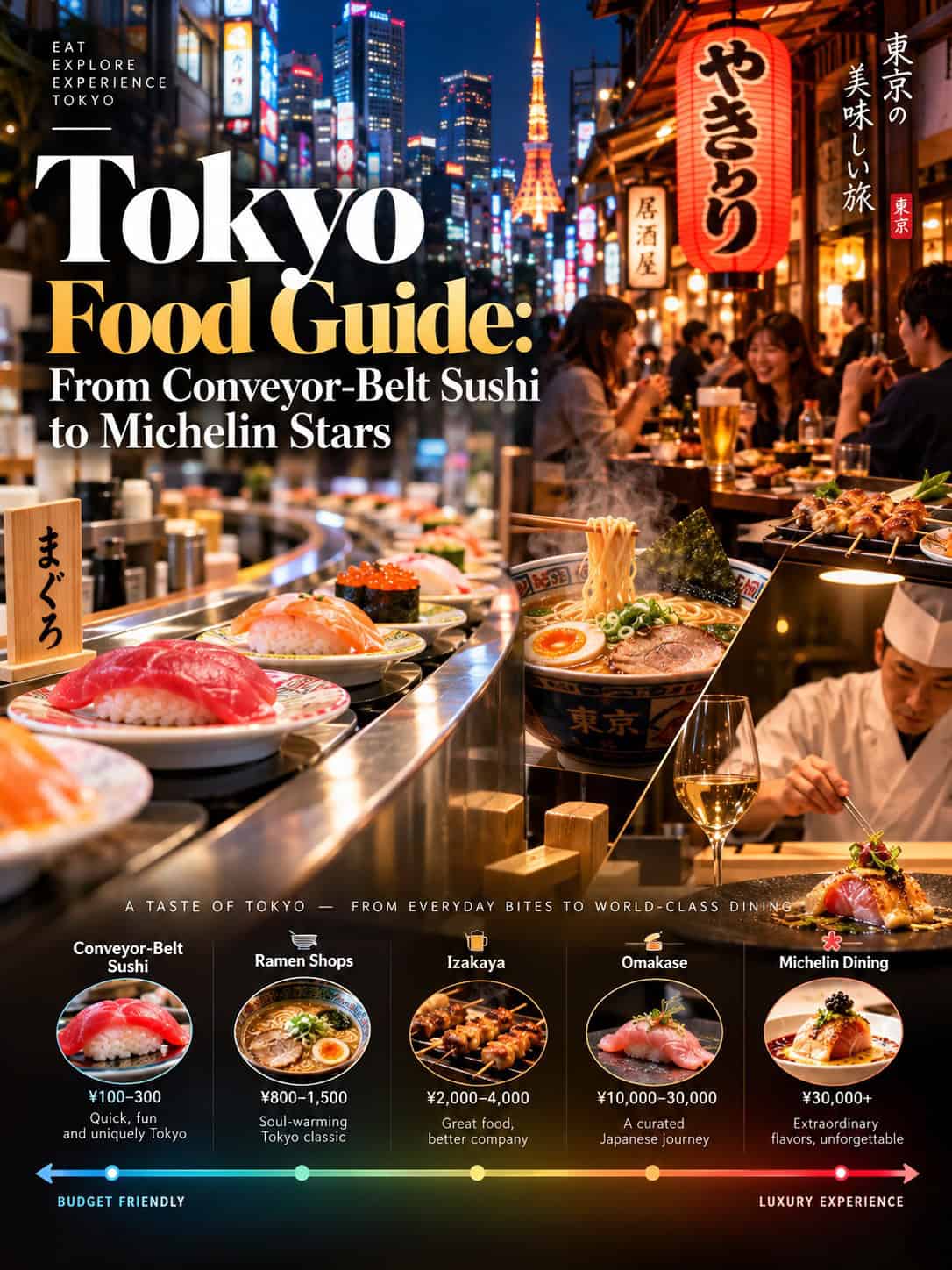
Tokyo food costs depend on neighbourhood and venue. For planning, allow roughly ¥900–1,500 for a casual ramen bowl, ¥1,500–3,000 for a conveyor-belt sushi meal and more for counter omakase: a mid-range sushi counter commonly runs ¥8,000–20,000 per person, while famous Michelin-starred counters can exceed ¥30,000. These are indicative budgets, not fixed chain menus or city-wide averages, so check restaurant menus before travelling. Planning time in the capital too? Our Tokyo travel guide covers the main areas.
Cheap Eats Tokyo vs Fine Dining: Example Meal Budgets
| Meal | Indicative budget per adult |
|---|---|
| Convenience-store onigiri and snack | ¥300–700 |
| Standing soba / udon | ¥500–1,000 |
| Casual ramen | ¥900–1,500 |
| Conveyor-belt sushi | ¥1,500–3,000 |
| Casual izakaya with drinks | ¥2,500–5,000 |
| Mid-range sushi counter | ¥8,000–20,000 |
| High-end omakase | ¥30,000+ possible |
These ranges are indicative estimates. Taxes, seating charges (otoshi), service fees, drinks and seasonal upgrades can change the bill. Many upscale restaurants charge for late cancellations or no-shows.
Tokyo Food Guide: Sample One-Day Meal Budget
For a cost-conscious day, a ¥600 breakfast, ¥1,200 ramen lunch and ¥2,000 conveyor-belt sushi dinner add up to ¥3,800 per adult before drinks. Travellers can spend much more at specialist sushi or omakase counters.
Tokyo Conveyor Belt Sushi: Sushiro vs Kura Sushi
Sushiro, Kura Sushi and Hama Sushi operate many sushi branches around greater Tokyo. Their pricing, queue registration and delivery systems differ by branch: touchscreen orders are common, and some branches deliver nearly all items directly instead of circulating open plates. Follow the display instructions and check whether your plate or item has its own price. Do not assume a universal ¥100 plate, since prices and location-specific surcharges differ across branches and premium or seasonal items can cost considerably more. The displayed touchscreen total is more useful than an old online price list. Most large chains offer cashless payment, but supported methods vary by location.
Sushiro Tokyo vs Kura Sushi Tokyo vs Hama Sushi
| Chain | Ordering experience | What makes it different |
|---|---|---|
| Sushiro | Touchscreen / branch-specific delivery system | Extensive promotions and seasonal sushi |
| Kura Sushi | Touchscreen and plate-return slots at many branches | Prize game associated with plate returns |
| Hama Sushi | Touchscreen and direct sushi delivery at many branches | Menu and promotions vary by branch |
All three chains change menus and prices by location and promotion. The best conveyor belt sushi in Tokyo depends more on freshness, queue length, location and food preferences than on a universal chain ranking.
Best Conveyor Belt Sushi Tokyo: First-Visit Instructions
- Register for a table or queue ticket at the entrance.
- Select the language on the tablet if available.
- Check each item price; sushi may be listed per one or two pieces.
- Order directly on the tablet and watch the indicated delivery lane.
- At Kura Sushi branches with the prize game, return eligible plates through the designated slot.
- Review the final bill and pay with an accepted method.
Tsukiji Outer Market Food vs Toyosu Fish Market
The wholesale seafood market moved from Tsukiji to Toyosu in October 2018. At Toyosu, visitors can watch the early tuna auction from public observation corridors; a separate close-up observation deck requires advance lottery-based admission. Toyosu also has market restaurants and the Senkyaku Banrai dining and shopping complex, which opened in 2024. Tsukiji Outer Market still operates as a food and shopping district with sushi, tamagoyaki, knives, dried ingredients and seafood vendors. Its visitor guidance recommends 9 AM–2 PM, and professional buyers have priority before 9 AM. Many stores close on Sundays and some Wednesdays, although individual calendars differ. The tuna wholesale auction takes place at Toyosu, not Tsukiji.
Tsukiji Outer Market vs Toyosu: Times and Access
| Feature | Tsukiji Outer Market | Toyosu Market |
|---|---|---|
| Main purpose for tourists | Sushi breakfast, market snacks, specialty food shops | Wholesale-market observation and seafood restaurants |
| Visitor timing | Approximately 9 AM–2 PM recommended | Tuna auction occurs early on market business days |
| Closed days | Many shops close Sundays and selected Wednesdays / holidays | Follow the Tokyo Metropolitan Wholesale Market calendar |
| Closest access | Tsukiji / Tsukijishijo stations | Shijo-mae Station on Yurikamome |
| Tuna auction | No | Yes; free corridor viewing or lottery-only close-up deck |
| Walking while eating | Discouraged; use designated spaces | Respect individual market restaurant rules |
The Tsukiji market association asks tourists to give working buyers priority until 9 AM, avoid blocking lanes with luggage and ask permission before photographing stalls. Prices and opening hours vary by shop.
Toyosu Fish Market Food and Tuna Auction
Toyosu Market opened in October 2018 and has market restaurants across three buildings. Free public observation corridors give a view of wholesale operations, while the closer tuna-auction observation deck requires a prior application and lottery selection. Confirm auction days in the metropolitan market calendar: arriving on a closed market day means no normal auction viewing. Senkyaku Banrai, an adjacent food and shopping complex, has separate operating hours from the working wholesale market.
Where to Eat in Tokyo: Best Food Neighbourhoods
Choose Ginza for high-end sushi and formal dining, Shinjuku’s Omoide Yokocho for compact yakitori and izakaya venues, Ueno’s Ameyoko for casual stalls, and Tokyo Station or department-store food halls for convenient prepared meals. Not every highly rated Tokyo restaurant is in Ginza, and not every yakitori counter in Omoide Yokocho is cheap. For places to stay, see the best hotels in Tokyo.
Where to Eat in Tokyo: Neighbourhood Comparison
| Area | Best for | When to go |
|---|---|---|
| Ginza | Sushi omakase, luxury dining, depachika | Reserved lunch or dinner |
| Shinjuku / Omoide Yokocho | Yakitori and izakaya atmosphere | Evening, check seating and cover charges |
| Shibuya | Modern casual dining and ramen | Lunch or dinner |
| Ueno / Ameyoko | Casual market food, bargain eateries | Daytime to early evening |
| Asakusa | Tempura, soba and traditional snacks | Morning through lunch |
| Tsukishima | Monjayaki | Lunch or dinner |
| Tokyo Station | Ramen, bento, vegan options, depachika-style food halls | Between train connections |
| Tsukiji | Seafood breakfast, tamagoyaki, market shops | 9 AM–1 PM |
Omoide Yokocho Food: What to Know Before Sitting Down
Expect small counters, grilled skewers, drinks and limited space for luggage. Some venues charge an otoshi seating fee or have drink-order expectations. Check posted menus, whether smoking is permitted and whether photos are welcome. Policies differ from stall to stall.
Tokyo Shoyu Ramen: What to Order and How to Eat
Tokyo-style shoyu ramen traditionally uses a soy-sauce seasoning base (tare), often with chicken, pork or seafood stock. Shoyu refers to the flavouring, not a guaranteed ingredient list. Shio, miso, tsukemen, abura soba and rich tonkotsu also appear throughout the city. Ask about meat, fish and allergens even if the broth looks clear. Our Japanese food guide covers regional dishes.
Tokyo Ramen: Shoyu, Shio, Tonkotsu and Tsukemen
| Style | Flavour / technique | Before ordering |
|---|---|---|
| Shoyu ramen | Soy-seasoned broth, often clear or amber | May include chicken, pork and fish stock |
| Shio ramen | Salt-seasoned broth | Light colour does not prove vegetarian |
| Tonkotsu ramen | Rich pork-bone stock | Not suitable for pork-free diets |
| Miso ramen | Miso-seasoned stock | Can include pork, seafood or dairy toppings |
| Tsukemen | Noodles dipped into concentrated broth | Check spice level and soup-warming options |
| Abura soba | Brothless noodles with sauce and oil | Sauce may contain meat or fish |
Many ramen shops use vending-machine tickets. Select a bowl and any toppings before taking a seat; staff may ask how firm you want your noodles. Tokyo Station has a cluster of ramen shops, while individual specialists are spread throughout the city.
Tokyo Restaurants: Booking, Payment and Etiquette
A handful of habits make Tokyo dining noticeably smoother. Many ramen and casual noodle shops use a ticket machine at the entrance — you buy your order before sitting down and hand the ticket to staff, which sidesteps language barriers entirely. Standing sushi and soba bars, called tachigui, are a genuinely distinctive Tokyo option: faster, cheaper, no-frills, and well suited to solo diners in a hurry. Well-known izakaya and sushi-ya, especially in Ginza and for omakase counters, often require advance reservation, sometimes weeks out, while casual neighborhood spots are generally walk-in friendly. Cashless payment has expanded enormously — cards, IC cards like Suica and Pasmo, and QR payment such as PayPay are now accepted at most chains and a growing number of independent shops — but it’s still smart to carry some cash as backup, particularly for small, traditional, or standing-bar establishments. English menus have improved in tourist-heavy areas like Shibuya, Shinjuku, and Ginza, but remain inconsistent at small, old-school neighborhood spots. Popular no-reservation places routinely form queues, and arriving at off-peak hours, around 11am for lunch or before 6pm for dinner, is the standard workaround. Don’t underestimate convenience stores either: 7-Eleven, Lawson, and FamilyMart onigiri, sandwiches, and bento are widely regarded as genuinely good, not just an emergency fallback.
Vegan Ramen Tokyo: Vegetarian and Allergen Tips
Japanese dashi can contain bonito or other fish even when a dish looks vegetarian. Soy sauce, miso, sesame and wheat also appear in many ramen recipes. T’s Tantan is known for plant-based ramen inside Tokyo Station; confirm the exact location, entrance, opening hours and latest menu before visiting. For allergies, ask staff about shared equipment and soup bases instead of relying only on translated dish names. For more street food, see our Osaka street food guide.
Vegan Ramen Tokyo: Practical Ordering Checklist
- Check whether soup and sauce contain fish-based dashi or bonito.
- Ask about pork or chicken extract even for vegetable toppings.
- Confirm whether noodles contain eggs.
- Check shared grills, fryers and equipment if cross-contact matters.
- Save a short Japanese ingredient allergy card offline.
Look for clearly described plant-based ramen at specialist restaurants such as T’s Tantan, but verify the current branch and menu. Vegan, vegetarian and allergy-safe are different claims, and menus can change without notice.
Tokyo Food Tour: One-Day Eating Route
9:00–10:30 AM — Tsukiji: Have a market breakfast and browse speciality shops after professional buyers finish their busiest period.
11:30 AM — Ginza: Explore a department-store basement food hall or take a reserved sushi lunch.
2:30 PM — Asakusa: Walk the district and try a small traditional snack, soba or tempura.
6:00 PM — Shinjuku: Finish at Omoide Yokocho or another izakaya district for yakitori.
This itinerary spans several neighbourhoods and requires metro journeys. Replace Asakusa with Tsukishima if monjayaki is your priority.
Explore guided Tokyo food tours and cooking experiences.
Best Food in Tokyo: Frequently Asked Questions
What is the best food in Tokyo to try first?
Start with Tokyo-style shoyu ramen, nigiri sushi, yakitori, tempura and monjayaki. Tsukiji is useful for seafood snacks, while Tsukishima specialises in monjayaki.
How many Michelin-starred restaurants are in Tokyo?
The 2026 guide lists 160 Michelin-starred restaurants: 12 three-star, 26 two-star and 122 one-star. Michelin publishes a new selection each year, so check the latest edition.
Where can I find cheap eats in Tokyo?
Try standing soba bars, casual ramen shops, major conveyor-belt sushi chains, local lunch sets and department-store food halls. Shinjuku’s Omoide Yokocho and Ameya-Yokocho near Ueno Station add atmosphere.
Should tourists visit Tsukiji or Toyosu Fish Market?
Visit Tsukiji for snack stalls, fresh seafood shops and shopping, or Toyosu for the wholesale-market observation corridor and tuna auction. The closer observation deck at Toyosu requires a separate advance lottery.
When is the best time for Tsukiji Outer Market food?
The market recommends 9 AM–2 PM and asks visitors not to obstruct wholesale buyers before 9 AM.
Can tourists watch the Toyosu tuna auction without booking?
Yes, from general public observation corridors on market business days. The closer observation deck requires an advance lottery.
Can I visit Tsukiji and Toyosu in the same morning?
It is possible by public transport, but a tuna auction requires an early Toyosu visit on a market business day. Plan Tsukiji afterward if stalls are still open.
How much does conveyor-belt sushi cost in Tokyo?
A meal commonly lands around ¥1,500–3,000 per person, and individual plates vary by branch and grade.
What is the difference between Sushiro Tokyo and Kura Sushi Tokyo?
Both offer touchscreen sushi ordering, but branch menus, delivery lanes, prices and queue procedures can differ. Kura Sushi is especially known for its plate-return game; Sushiro has its own seasonal promotions. Check a specific branch.
Is Kura Sushi better than Sushiro Tokyo?
Neither is universally better. Kura has its plate-return game; Sushiro offers changing seasonal menus. Check the nearest branch’s price, waiting time and ordering system.
Where is the best Tokyo shoyu ramen?
Tokyo-style shoyu ramen appears city-wide, including specialist restaurants and ramen shops around Tokyo Station. Compare the broth base, current menu and queues rather than relying on an all-time ranking.
Does Tokyo ramen always contain pork?
No, but many broths contain pork, chicken, fish or combinations of them. Ask about both stock and toppings when avoiding an ingredient.
Is it easy to eat vegan in Tokyo?
It is improving but still requires planning, mainly because fish-based dashi appears in many dishes that look meat-free. T’s Tantan, known for plant-based ramen inside Tokyo Station, is a useful option; confirm the current menu.
Do I need cash for eating out in Tokyo?
Not usually, since cards and QR payment are widely accepted, but carry some cash as backup, especially for small or traditional shops.
What is tachigui?
Standing sushi or soba bars: faster, cheaper and no-frills, a useful option for a quick solo meal.
What is otoshi in Tokyo restaurants?
Otoshi is a small appetizer or seating-related charge common in some izakaya. The charge and menu policies vary, so ask before ordering.
Bottom Line
The best food in Tokyo depends on how you want to eat: book omakase in advance, try casual shoyu ramen and conveyor-belt sushi without a large budget, and explore Tsukiji in the morning. Pair food stops by neighbourhood rather than travelling across Tokyo for every meal. See our Tokyo vs Kyoto comparison, guide to getting around Tokyo and Tokyo airport guide for the rest of the trip.