By Nippon With Me EditorialPublished Updated
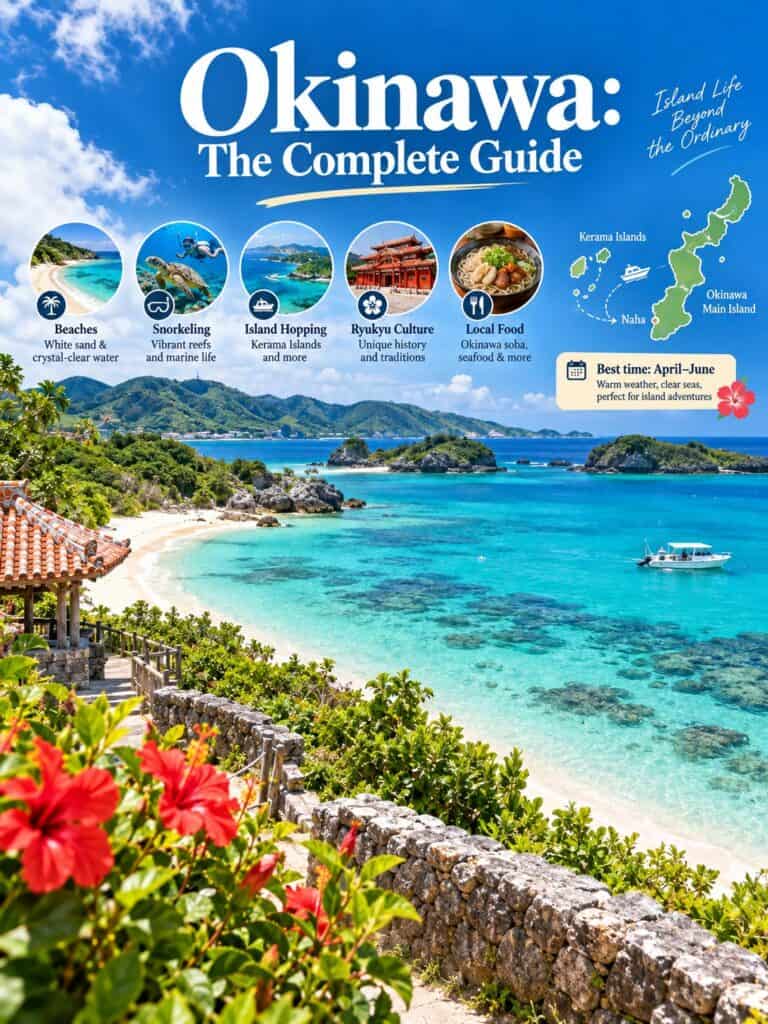
Okinawa does not look or feel like the rest of Japan: it is subtropical, made of islands, and shaped by Ryukyuan history and decades of American administration after World War II. The best things to do in Okinawa combine clear-water beaches and snorkeling with castles, memorials and Okinawan food. This Okinawa travel guide covers Naha, the main island, a beach comparison across the Kerama Islands, Miyakojima and Ishigaki, how to get around, safety notes and itineraries for 3 and 5 days.
Okinawa at a Glance
| Category | Details |
|---|---|
| Best for | Beaches, snorkeling and diving, subtropical scenery, Ryukyuan history and a slower pace than mainland Japan |
| Ideal trip length | 3 to 4 days based in Naha, or 5 to 7 days with a rental car covering the north and south |
| Getting there | Fly into Naha Airport (OKA), then take the Yui Rail monorail into central Naha, roughly a quarter of an hour |
| Getting around | Yui Rail covers central Naha. A rental car is very useful for the aquarium, the south and most main-island beaches |
| Best time to visit | Late October to mid May for the most reliable weather. Typhoon season is roughly June to October, peaking in August and September |
| Currency | Japanese yen, the same as mainland Japan |
Okinawa Beaches Compared: Main Island, Kerama, Miyakojima and Ishigaki
Okinawa beaches differ a lot by island. Use this table to choose where to base yourself, then check conditions locally, because water clarity, currents and facilities change.
| Area | How to get there | Beach season | Snorkeling | Best for |
|---|---|---|---|---|
| Naha and the main island | Rental car or buses and taxis from Naha. Naminoue Beach is within the city | Roughly April to October for swimming. Winter is cooler and windier | Fair to good, better in the north and west. Naminoue is more for a quick swim than snorkeling | Easy trips, combining beaches with sightseeing |
| Kerama Islands (Zamami and nearby) | Ferry from Tomari Port in Naha, roughly an hour by high-speed ferry, and a slower car ferry | Roughly April to October, with the clearest conditions often cited in the warm months | Excellent. Known for very clear water, called Kerama Blue | Snorkeling and diving day trips or overnight stays |
| Miyakojima | Flight from Naha, usually under an hour, or direct flights from some mainland cities | Roughly April to October | Very good, with clear water off many beaches | Beach holidays with a rental car, and longer stays |
| Ishigaki | Flight from Naha, usually about an hour, or direct flights from some mainland cities | Roughly April to October | Very good, with reef and marine-life tours available | Snorkeling and diving, and a base for nearby islands |
The swimming seasons in the table are approximate: many popular resort beaches open for swimming in March, and snorkeling and diving are possible year round, with humpback whales visiting the Kerama Islands in winter. Flight times and routes vary by season and airline, so check current timetables. For beach hotels on the main island, see our Okinawa beach resorts guide.
Okinawa Transport Reality: Do You Need a Car?
- Naha only: Yui Rail, buses, taxis and walking cover the city. You do not need a car there.
- Main island beaches and sights: without a car, many beaches and attractions in the north and south are hard to reach. Buses run but are infrequent, so plan around timetables or use tours and taxis.
- Outer islands: the Kerama Islands need a ferry, while Miyakojima and Ishigaki need a flight from Naha or the mainland. Plan boat and flight times, and expect weather to cause delays.
Yui Rail Fares and Tickets
Yui Rail, the Okinawa Urban Monorail, runs from Naha Airport station through central Naha to Shuri and on to the terminus at Tedako-Uranishi. Children under 12 pay the child fare, and up to two children under 6 ride free with an adult. Buy a QR ticket at the station machines or tap an OKICA IC card at the gate. Unlimited-ride QR tickets are sold for 24 hours (¥1,000 adult, ¥500 child) and 48 hours (¥1,800 adult, ¥900 child), counted from the time of purchase.
| From Naha Airport to | Adult fare | Child fare | Ride time |
|---|---|---|---|
| Prefectural Office (Kencho-mae) | ¥290 | ¥150 | 13 minutes |
| Makishi | ¥320 | ¥160 | 16 minutes |
| Omoromachi | ¥320 | ¥160 | 19 minutes |
| Shuri | ¥360 | ¥180 | 27 minutes |
| Tedako-Uranishi (end of line) | ¥390 | ¥200 | 37 minutes |
Airport Buses to the North and South
Buses leave Naha Airport from platforms grouped by area. Express buses No. 111 and No. 117 serve Nago and the Churaumi Aquarium, and No. 117 runs direct to the aquarium. No. 83 goes to Gyokusendo for Okinawa World, and Nos. 120 and 143 serve Chatan, where American Village is. Airport limousine routes link the airport with resort hotels in Chatan, Onna and Nago. Times and fares are listed by origin and destination on the Bus Navi Okinawa site.
Renting a Car and the International Driving Permit
Okinawa drives on the left. Most visitors renting a car need a valid driving license from home plus an International Driving Permit issued under the 1949 Geneva Convention. A permit issued under the 1968 Vienna Convention is not valid for driving in Japan. Drivers from a small number of countries, including Switzerland, Germany, France, Belgium, Monaco and Taiwan, can instead use their home license with an official Japanese translation, which is normally obtained through the Japan Automobile Federation. Always carry the permit or translation, your home license and your passport. Only the paper booklet version of the permit is accepted; card-type and smartphone versions are not valid in Japan. A permit is valid for up to one year from its issue date and for one year from your arrival in Japan, and your passport entry stamp shows the arrival date, so if you pass through an automated gate, ask the customs inspection desk for a stamp. Rental insurance is mandatory, and rental cars typically need an ETC card for expressway tolls, which you get from the rental company.
Rules, documents and eligible countries can change, so confirm your exact situation with your rental company and the issuing authority before you travel, and arrange the permit in your home country before departure. Book a rental car early in peak periods like summer and Golden Week.
Things to Do in Okinawa: Top Attractions and Okinawa Attractions Worth Your Time
Shuri Castle
The former royal palace of the Ryukyu Kingdom is a UNESCO World Heritage site that was rebuilt several times, most recently after a 2019 fire. Reconstruction work has continued, so which areas are open and the admission arrangements can change. Check current information before your visit.
Churaumi Aquarium
One of the largest aquariums in Japan, in Motobu on the northern coast, built around a huge tank with whale sharks and manta rays. It is roughly a 90-minute drive from Naha, so it is usually a full day trip. General admission is ¥2,180 for adults, ¥1,440 for high school students and ¥710 for elementary and junior high school students; children under six are free. Re-entry is allowed on the same day only, and opening hours change with the season.
Okinawa World and Gyokusendo Cave
A theme park south of Naha built around Gyokusendo, a large limestone cave with a lit walking route past stalactites. The park also has a recreated Ryukyuan village and shows.
Peace Memorial Park
Near the southern tip, the main memorial to the Battle of Okinawa includes the Peace Memorial Museum and the Cornerstone of Peace, inscribed with the names of people of all nationalities who died in the battle. The park grounds are open to walk, and it is about a 50-minute drive from central Naha.
American Village
A shopping and dining complex in Chatan, popular at sunset and reflecting the island’s mix of local and American culture. Its Ferris wheel closed in 2022, so do not use it as a landmark. Most shops and restaurants are open from 11:00 to 21:00, with no closing days. From Naha Bus Terminal, buses 20, 28, 29 and 120 reach the Mihama American Village Iriguchi stop in about 40 minutes for ¥840, and the drive takes about 30 minutes, longer at rush hour.
Cape Manzamo
A clifftop lookout on the west coast, roughly an hour to an hour and a quarter by car from Naha, known for a limestone formation shaped like an elephant’s trunk. It faces west and is popular at sunset.
Kerama Islands
A group of small islands about an hour offshore by high-speed ferry from Naha’s Tomari Port, known for very clear water. Zamami is the most visited for day trips. Ferry schedules and prices change, so check the operator.
Two vessels serve the Keramas from Tomari Port, each from its own pier: the slower Ferry Zamami leaves from the south bank, and the high-speed Queen Zamami leaves from the north bank. The Ferry Zamami takes about 1 hour 30 minutes to reach Aka and about 2 hours to reach Zamami on the sailing that calls at Aka first, with about 30 minutes between the two islands. Reservations open one month before the departure date, on the same day of the month, from 10:00 to 17:00, and you board at least 10 minutes before departure. Sailings change with weather and sea conditions.
Opening Hours and Admission at a Glance
| Sight | Hours | Admission |
|---|---|---|
| Churaumi Aquarium | 8:30am to 6:30pm in the off season, last admission 5:30pm; later in peak periods | Adults ¥2,180, high school ¥1,440, elementary and junior high ¥710, under 6 free |
| Peace Memorial Museum | 9:00am to 5:00pm, last admission 4:30pm; open January 4 to December 28 | Adults ¥300, children ¥150 |
| Shuri Castle Park, free area | 8:00am to 7:30pm from July to November, with shorter hours in winter | Free |
Inside Shuri Castle Park, the paid area is open 8:30am to 7:00pm from July to November with ticket sales ending at 6:30pm, and shorter hours in winter.
Naha Neighborhoods: Where to Go
- Kokusai Street and downtown: Naha’s main shopping and dining strip with the covered Heiwa-dori arcade, and the most convenient base for first-time visitors.
- Shuri: a hillside district built around the castle, quieter than downtown.
- Tomari Port area: the ferry terminal for the outlying islands, practical rather than scenic.
Beach Safety in Okinawa: Swimming, Jellyfish and Typhoons
- Swim in designated areas: use beaches with lifeguards and nets when possible, and obey signs and flags. Some bays and reef areas have currents or restrictions on swimming.
- Habu jellyfish: Okinawa issues a seasonal advisory for box jellyfish, which has run from June to September in recent years. Many beaches are netted, but nets are not perfect. Cover exposed skin and swim only inside netted zones.
- Tides and reefs: wear reef-safe shoes, and check tides before entering shallow reef areas.
- Typhoons: they can cancel flights and ferries at short notice, so build flexibility into your plans and consider insurance.
- Sun: the sun is strong even outside summer, so wear sun protection all year.
Conditions change, so ask your hotel, dive shop or the beach staff for the latest advice on the day.
If It Rains or a Typhoon Approaches: Plan B
Typhoons are most common in August and September but can occur anytime between June and October, and they are usually followed by spells of clear skies. Visit Okinawa publishes typhoon updates, and the Japan Meteorological Agency covers all weather information. On a wet or windy day, swap the beach for Churaumi Aquarium, which has no scheduled closing days but may close temporarily for typhoons, or for the Peace Memorial Museum at ¥300 for adults. Keep the Kerama day loose, because ferry sailings change with weather and sea conditions.
Best Time to Visit Okinawa
Late October to mid May generally has the most reliable weather, with late March to mid May a sweet spot. Summer is hot and humid, the rainy season runs from May to late June, and typhoon season runs roughly June to October. Winter is mild but windier, which can make the sea choppier. The sea averages around 21°C in February and nearly 30°C in August. For the national picture, see our guide to the best time to visit Japan.
Okinawa 3-Day Itineraries
3 days for beaches
- Day 1: arrive in Naha, Naminoue Beach and Kokusai Street.
- Day 2: Kerama Islands day trip by ferry for snorkeling.
- Day 3: a main-island beach on the west coast, with sunset at Cape Manzamo if you have a car.
3 days for culture and history
- Day 1: Shuri Castle and Kokusai Street.
- Day 2: Peace Memorial Park and Okinawa World.
- Day 3: Churaumi Aquarium, with American Village on the way back.
Okinawa 5-Day Itineraries
5 days for beaches
- Day 1: Naha, Naminoue Beach and Kokusai Street.
- Day 2: a main-island west-coast beach and Cape Manzamo.
- Day 3: Churaumi Aquarium and a northern beach.
- Day 4: Kerama Islands day trip, or a flight to Miyakojima or Ishigaki if you want a second island.
- Day 5: a relaxed beach day, then return to Naha.
For a ready-made plan, see our 5-day Okinawa beach itinerary.
5 days for culture and history
- Day 1: Shuri Castle and Kokusai Street.
- Day 2: Peace Memorial Park and Okinawa World.
- Day 3: Churaumi Aquarium, American Village on the way back.
- Day 4: Cape Manzamo and a slow day in the countryside, or tastings of local food and awamori.
- Day 5: a Kerama Islands day trip.
Food in Okinawa
Okinawan food is distinct from the mainland: Okinawa soba (wheat noodles in pork broth), taco rice, rafute (braised pork belly), goya champuru (bitter melon stir-fry), awamori (a local distilled spirit) and beni imo, the purple sweet potato. For regional dishes across the country, see our Japanese food guide.
Practical Tips
- Check visa requirements before you fly, see our Japan visa guide.
- Rent a car early if you plan to drive, and bring the right license documents.
- Keep a flexible day in your plan in case of typhoon disruption.
- Check beach and jellyfish conditions before swimming.
Okinawa FAQ
What are the best things to do in Okinawa?
Visit Shuri Castle and Peace Memorial Park for history, Churaumi Aquarium and the Kerama Islands for marine life, and spend time at a beach. Add Cape Manzamo and Okinawan food for variety.
What are the best Okinawa beaches?
It depends on where you base yourself. The Kerama Islands, Miyakojima and Ishigaki are known for clear water, while the main island is easier to combine with sightseeing.
How many days do I need in Okinawa?
Three to four days covers Naha and one or two day trips. Five to seven days lets you add the north, the Kerama Islands and possibly another island.
Do I need a rental car in Okinawa?
Not for Naha alone. For the aquarium, the south and many beaches on the main island, a car is very useful because buses are infrequent.
Can I drive in Okinawa with an International Driving Permit?
Most visitors need a permit issued under the 1949 Geneva Convention plus their home license. Some countries use an official translation instead. Confirm with your rental company before you travel.
When is jellyfish season in Okinawa?
The official habu jellyfish advisory has run from June to September in recent years. Swim in netted areas and cover exposed skin.
When should I avoid Okinawa because of typhoons?
Typhoon season runs roughly June to October, peaking in August and September. You do not have to avoid it entirely, but keep your plans flexible.
Is Okinawa a good beach destination or mainly a historical one?
Both. Most itineraries mix beaches and snorkeling with sites like Shuri Castle and Peace Memorial Park.