By Nippon With Me EditorialPublished Updated
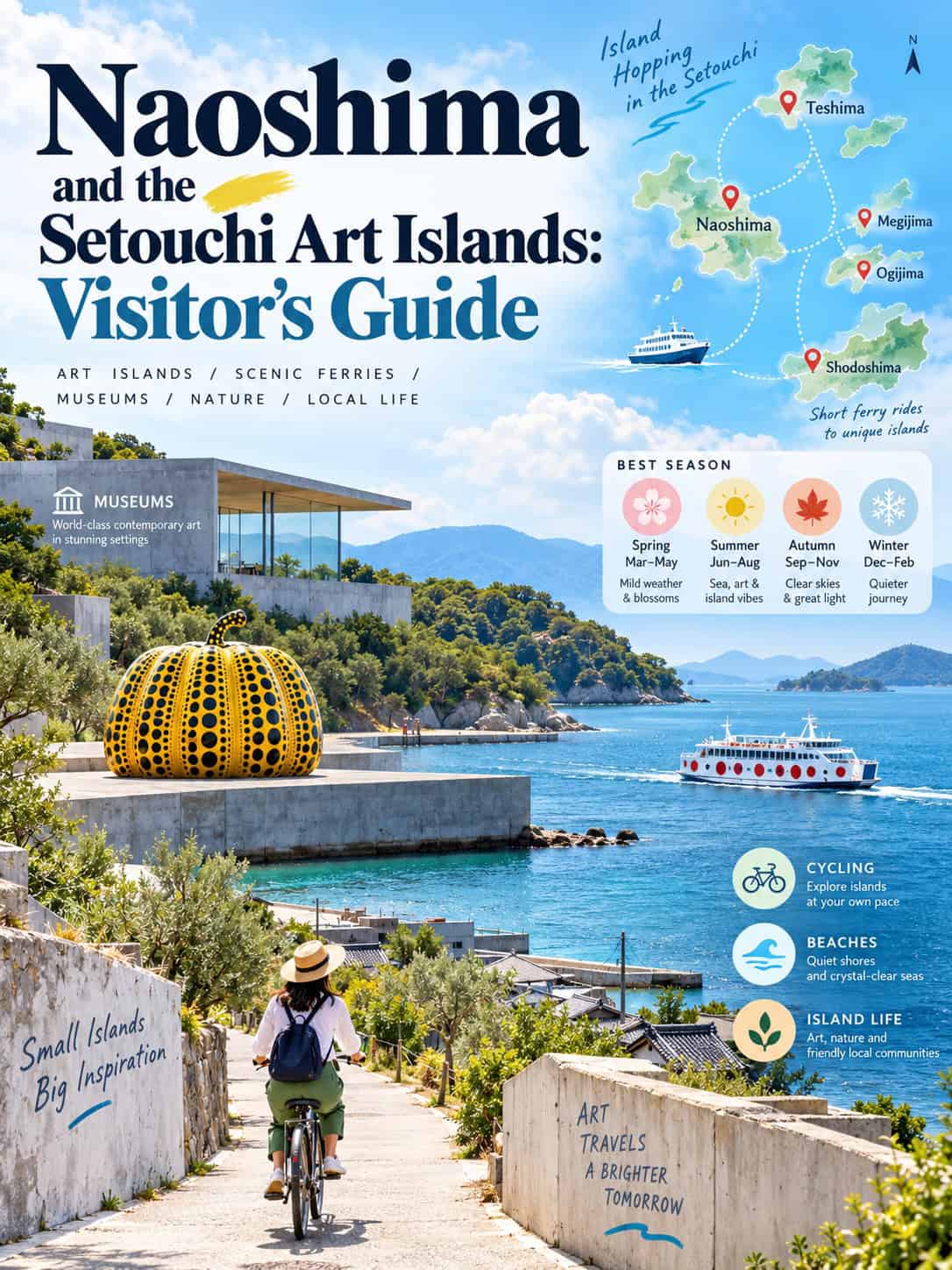
Discover things to do in Naoshima, Japan’s art island in the Seto Inland Sea. This Naoshima island guide covers Chichu Art Museum, Benesse House and the Naoshima New Museum of Art, Yayoi Kusama’s pumpkins and Honmura’s Art House Project. It also explains ferries from Uno and Takamatsu, current museum prices, closures, and day trips to the neighbouring islands of Teshima and Inujima and the Setouchi Triennale that connects them.
Things to Do in Naoshima: Planning Essentials
| Category | Details |
|---|---|
| Core islands | Naoshima, Teshima, and Inujima — long-running art projects under Benesse Art Site Naoshima |
| Getting there | Train to Uno Port (via Okayama) then a ~20-minute ferry, or a ferry from Takamatsu (about 50–60 minutes) |
| Key architect | Tadao Ando, who designed Benesse House Museum and the underground Chichu Art Museum |
| Booking | Chichu requires a timed-entry ticket; Lee Ufan Museum sells online and on-site tickets without the same mandatory timed-entry rule |
| Setouchi Triennale | An art festival across the islands held every three years since 2010; next edition expected 2028 |
| Ideal trip length | 1-2 days for Naoshima alone; 2-3 days to add Teshima and/or Inujima |
Naoshima Art Museums: Admission Prices
| Museum | Online | On site |
|---|---|---|
| Chichu Art Museum (weekday) | ¥2,500 | ¥2,800 |
| Chichu (weekend / holiday) | ¥2,700 | ¥3,000 |
| Benesse House Museum | ¥1,300 | ¥1,500 |
| Lee Ufan Museum | ¥1,200 | ¥1,400 |
| Naoshima New Museum of Art | ¥1,500 | ¥1,700 |
| ANDO MUSEUM | ¥600 | ¥700 |
| Art House multi-site (five houses) | ¥1,200 | ¥1,400 |
| Minamidera (separate) | ¥600 | ¥700 |
| Kinza (separate) | ¥600 | ¥700 |
| Teshima Art Museum | ¥1,800 | ¥2,000 |
Chichu, Minamidera, Kinza and Teshima require timed slots. Children aged 15 and under often enter free but may still need a reservation. Use the official site calendar before you travel.
Compare guided art-island visits and attraction tickets.
How Naoshima Became an Art Island
The transformation began in 1989 with the Naoshima International Camp in the island’s south, a project supervised by architect Tadao Ando that included Mongolian yurts for overnight stays and a sculpture by Karel Appel, aimed at educational and cultural goals rather than tourism. Ando went on to design the Benesse House Museum, which combines an art museum with a hotel, commissioning works from artists including Hiroshi Sugimoto and Yayoi Kusama that gradually spread out into the surrounding landscape rather than staying confined indoors.
In 1998, the Art House Project began in Naoshima’s Honmura district, restoring old abandoned houses and turning them into site-specific artworks reflecting the area’s own history rather than imported pieces. Ando’s underground Chichu Art Museum followed in 2004, built below ground specifically so its structure wouldn’t disturb the view over the Inland Sea. The same site-specific, locally rooted approach that built Naoshima’s reputation later expanded to Teshima and Inujima, and since 2010 these efforts have fed into the Setouchi Triennale, the region’s larger international art festival. Our Osaka travel guide covers the city’s main neighbourhoods.
Naoshima’s Must-See Art Museums
Chichu Art Museum presents Claude Monet’s Water Lilies paintings in a natural-light gallery alongside works by James Turrell and Walter De Maria. Tadao Ando designed the building largely underground to protect the landscape. Timed entry is essential: book a specific date and time. Official online tickets cost ¥2,500 on weekdays and ¥2,700 on weekends and public holidays; on-site prices, if space remains, are ¥2,800 and ¥3,000, and children aged 15 and under enter free. Lee Ufan Museum offers general online tickets for ¥1,200 or on-site tickets for ¥1,400, with no mandatory timed slot. Chichu has an extended maintenance closure from January 12 through March 19, 2027, so check temporary closures before you plan. Before booking, check Japan visa requirements for your passport.
Benesse House Museum combines contemporary art with a hotel. Online museum admission is ¥1,300, or ¥1,500 on site; hotel guests and children aged 15 or younger enter free. Outside, Yayoi Kusama’s Red Pumpkin stands near Miyanoura Port and her Yellow Pumpkin sits beside the coast in the Benesse area, so outdoor access can change during weather or maintenance. The Yellow Pumpkin has its own dramatic history: in August 2021, high waves from a typhoon loosened the sculpture’s mounting and swept it into the sea in three pieces. A faithfully recreated version was unveiled on the island in October 2022, restoring one of Naoshima’s most photographed landmarks.
Naoshima New Museum of Art: A Major New Stop
Naoshima New Museum of Art opened in 2025 with architecture by Tadao Ando, and its galleries expand the island’s contemporary-art offering beyond Chichu and Benesse House. Tickets cost ¥1,500 online or ¥1,700 on site, with no timed slot. The museum is closed from November 24 to noon on December 12, 2026, for an exhibition rotation, so check the calendar for current dates.
The Art House Project in Honmura
The Art House Project comprises seven sites in Honmura, and each pairs a historic building with a single artist’s work, but ticketing differs by artwork. The official multi-site ticket covers five houses for ¥1,200 online or ¥1,400 on site. Minamidera and Kinza require separate ¥600 online tickets, with time slots and limited capacity. Minamidera combines architecture by Tadao Ando with James Turrell’s “Backside of the Moon,” a darkened space that plays with visitors’ perception of light much like Turrell’s installation at the Chichu Art Museum. Haisha, a former dental office, was reworked by artist Shinro Ohtake into an eclectic, kitsch-filled space. Kadoya, a 200-year-old house renovated with traditional techniques, houses Tatsuo Miyajima’s “Sea of Time ’98,” a floor of colored LED counters built with help from island residents. Go’o Shrine, restored by Hiroshi Sugimoto, links an underground chamber to the main shrine via a glass staircase and is part of the multi-site ticket. Kinza normally admits only one guest per timed reservation, and it is scheduled for maintenance from October 13, 2026 into early January 2027, so check the calendar.
Beyond Naoshima: Teshima and Inujima
Teshima Art Museum combines architect Ryue Nishizawa’s shell-shaped building with Rei Naito’s Matrix installation, in which water gathers and moves slowly across the floor. Book a timed admission: the official price is ¥1,800 online or ¥2,000 on site. Ferry and bus connections matter as much as the museum reservation, so allow a full day if you travel from Naoshima.
Inujima Seirensho Art Museum, on the smaller island of Inujima, occupies the ruins of a copper refinery that operated for only about a decade around the turn of the 20th century. Architect Hiroshi Sambuichi’s design preserves and reuses the original chimney and karami bricks (made from refining slag) under the guiding idea of “using what exists to create what is to be,” and runs on solar and geothermal energy with a plant-based water purification system. Inside, Yukinori Yanagi’s artwork spans six connected spaces, built around themes drawn from novelist Yukio Mishima’s criticism of Japan’s modernization.
The Setouchi Triennale
The Setouchi Triennale is an international art festival spread across the Seto Inland Sea’s islands, held every three years since its first edition in 2010; the next edition is expected in 2028. Naoshima, Teshima, and Inujima form its core, given their long-running permanent art projects, alongside Shodoshima, Megijima, and Ogijima. Several smaller islands — Oshima, Honjima, Takamijima, Awashima, and Ibukijima — join for the autumn session only, while the Seto Ohashi Bridge area participates in spring. Visiting during a Triennale year adds temporary installations and events on top of the permanent museums, but also brings noticeably heavier crowds and ferry demand.
How to Get to Naoshima: Ferries and Trains
From Okayama, take JR services toward Uno, commonly changing at Chayamachi. Allow roughly 50–65 minutes by rail to Uno Station, then walk to Uno Port. Ferries to Naoshima usually take around 20 minutes to Miyanoura, and Takamatsu–Miyanoura passenger service takes about 50–60 minutes, a useful option if you are coming from or continuing to Shikoku. Check whether your ferry docks at Miyanoura or Honmura, since their onward bus connections differ. Check the ferry timetable in advance, since schedules vary by season and ferries do not run constantly throughout the day.
Naoshima Island Guide: Choosing the Right Ferry Port
| Origin | Arrival | Planning time |
|---|---|---|
| Okayama by JR to Uno | Uno Port | About 50–65 minutes rail + walk |
| Uno Port | Miyanoura, Naoshima | About 20 minutes by ferry |
| Takamatsu Port | Miyanoura, Naoshima | About 50–60 minutes, vessel dependent |
| Naoshima to Teshima / Inujima | Depends on ferry operator and service | Check all legs before buying timed museum tickets |
Some boats dock at Honmura instead of Miyanoura. Check the actual pier, whether the service takes bicycles and the last return departure. Weather can cancel boats. Our guide to the best time to visit Japan compares the seasons.
Compare train connections to Uno and Takamatsu.
Getting Around the Islands
Naoshima is hilly enough that a rental bicycle, including electric options available near Miyanoura Port, makes getting between the port, Honmura’s Art House Project and Benesse House considerably easier than walking the whole island. A local shuttle bus also connects the main sites for those who would rather not cycle. Teshima has hills and more widely separated artworks, so an electric bicycle or local bus helps. Inujima is much smaller and many sights are walkable from the port. Match all ferry legs and museum reservations before committing, since inter-island service can be sparse outside Triennale periods.
Naoshima Island Guide: Two-Day Starting Point
Day 1 — Naoshima: Arrive at Miyanoura Port and photograph the Red Pumpkin, then head to the Chichu Art Museum for your pre-booked entry slot. In the afternoon, explore the Art House Project in Honmura, then finish at Benesse House and the Yellow Pumpkin pier before sunset.
Day 2 — Teshima or Inujima: Take the morning ferry to Teshima for the Teshima Art Museum, or to Inujima for the Seirensho Art Museum, depending on ferry timing from your base. Either option works as a half-to-full-day add-on before heading back to Okayama or on to Takamatsu.
Things to Do in Naoshima: Realistic One-Day Schedule
09:00: Arrive at Miyanoura, see the Red Pumpkin and take an island bus or bicycle toward the museum area.
10:00–11:30: Visit Chichu at your booked admission time. Allow about 90 minutes.
12:00–13:30: See Benesse House Museum and the nearby outdoor artworks.
14:00–16:00: Travel to Honmura for the Art House Project or Naoshima New Museum of Art. A single day cannot comfortably fit every museum.
Before departure: Return to the actual ferry terminal with extra time for buses and luggage. How to get from Osaka to Naoshima is covered in a separate guide.
Setouchi Art Islands: Upcoming Closures
| Site | Scheduled closure |
|---|---|
| Chichu Art Museum | January 12–March 19, 2027 |
| Kinza | October 13, 2026 into early January 2027 |
| Naoshima New Museum of Art | November 24 to noon on December 12, 2026 |
| Lee Ufan Museum | December 19, 2026 |
| Benesse Art Site Naoshima | Yearly winter maintenance, January–March; check exact dates |
These announced dates can change, so check the official calendar. In particular, avoid planning a Chichu-focused trip for January to mid-March.
Best Time to Visit
Spring and autumn bring the most comfortable weather for walking and cycling between sites, and Triennale years (next expected 2028) add temporary artworks but also significantly heavier crowds and ferry demand. Outside Triennale years, the islands are notably quieter, which suits travelers who want to actually sit with the art rather than queue for it — but also means double-checking ferry frequency, since off-season schedules run less often.
Practical Tips for First-Time Visitors
Book Chichu and other timed-entry artworks in advance. Lee Ufan Museum offers standard online and on-site tickets, but can close for maintenance. Check the Benesse opening calendar for every museum and the ferry operator’s schedule for your travel date. Some small shops prefer cash, while official museum online reservations generally accept cards. Comfortable shoes and, ideally, a rental bicycle make a real difference, since several of Naoshima’s sights sit at a meaningful walking distance from each other across hilly terrain. For other trip basics, see our Japan packing list.
Frequently Asked Questions
How did Naoshima become an art island?
Benesse Holdings and architect Tadao Ando began transforming the island in 1989 with an educational camp project, followed by the Benesse House Museum, the Art House Project in Honmura (1998), and the underground Chichu Art Museum (2004). The approach later expanded to Teshima and Inujima.
Do I need to book tickets in advance?
Reserve a timed slot for Chichu, Minamidera, Kinza and Teshima Art Museum. Lee Ufan Museum, Benesse House Museum and the Naoshima New Museum of Art have online and on-site admission options, subject to opening schedules and capacity.
How do I get to Naoshima?
Take a train from Okayama to Uno Station (about an hour, usually with a change at Chayamachi), then a roughly 20-minute ferry from Uno Port to Naoshima’s Miyanoura Port. A direct ferry from Takamatsu takes about an hour as an alternative route.
What happened to Yayoi Kusama’s Yellow Pumpkin?
In August 2021, a typhoon’s high waves loosened its mounting and swept it into the sea in three pieces. A faithfully recreated version was unveiled on Naoshima in October 2022.
What is the Setouchi Triennale?
An international art festival spread across the Seto Inland Sea’s islands, held every three years since 2010, with the next edition expected in 2028. Naoshima, Teshima, and Inujima form its core, joined by several other islands depending on the season.
Is Naoshima worth visiting outside a Triennale year?
Yes. Permanent art sites run outside Triennale years, but do not assume they open every day: many close on Mondays or for maintenance. Chichu will close January 12–March 19, 2027, and Benesse has a yearly maintenance period in winter, so check the calendar. Non-Triennale years are notably quieter.
Should I visit Teshima or Inujima as well?
Both are worthwhile if you have the extra day. Teshima Art Museum offers a meditative, single-installation experience, while Inujima’s Seirensho Art Museum combines industrial ruins with a more conceptually dense installation — pick based on which style interests you more, or do both if your schedule allows.
How many days should I plan for the art islands?
One to two days covers Naoshima’s main sights comfortably. Add a half-day to a full day for Teshima or Inujima if you want to see either, bringing a realistic total to two or three days. If you are already visiting nearby, our Hiroshima guide suits a longer western Japan trip, and our Japan Rail Pass guide helps you compare rail costs.
What are the best things to do in Naoshima?
Visit Chichu, Benesse House, the Naoshima New Museum of Art, Honmura’s Art House Project and Yayoi Kusama’s outdoor pumpkins.
How much does Chichu Art Museum cost?
Online weekday tickets cost ¥2,500 and weekend or holiday tickets ¥2,700. On-site tickets cost ¥2,800 or ¥3,000 when available. Book a time slot.
Is Chichu Art Museum open in winter?
Not always. The museum has scheduled maintenance from January 12 through March 19, 2027, so check the calendar before you plan a winter trip.
Does Lee Ufan Museum require a timed ticket?
Not under the same rules as Chichu. Standard online tickets cost ¥1,200 and on-site tickets ¥1,400, subject to opening hours.
Is Naoshima New Museum of Art worth adding?
It expands the island’s contemporary-art programme and features Tadao Ando architecture. Allow time for rotating exhibits and check scheduled closures.
Can you visit Naoshima and Teshima in one day?
Possible only with a restricted selection of sights and well-matched ferries. Two days makes the museum reservations and transfers more practical.
Do I need a car on Naoshima?
No. Buses, walking and rental bicycles cover many visitor routes. Use an electric bicycle for hillier sections, and check restrictions around the Benesse grounds.
Bottom Line
Naoshima and its neighboring art islands reward travelers willing to book ahead, work around ferry schedules, and treat a converted copper refinery and an underground museum as seriously as any gallery in Tokyo — a genuinely unique way to combine contemporary art with rural island travel.