By Nippon With Me EditorialPublished Updated
Hokkaido is Japan’s northernmost main island and a destination for winter sports, food, hot springs, flower fields and national parks. This Hokkaido travel guide starts with Sapporo and Niseko, then shows how to visit Otaru, Furano, Biei, Hakodate and eastern Hokkaido. Choose a route by season: ski resorts and snow festivals in winter, lavender and outdoor activities in summer, and autumn colour from early autumn in the mountains.
Things to Do in Hokkaido: Travel Planning at a Glance
| Category | Details |
|---|---|
| Best for | Winter sports, snow festivals, seafood, dairy, wide-open scenery, a slower pace than Honshu’s big cities |
| Ideal trip length | 3-4 days in Sapporo alone, or 5-7 days combining Sapporo with a Niseko stay |
| Getting there | Fly into New Chitose Airport (CTS), then the Rapid Airport train to Sapporo (~35 minutes) |
| Sapporo to Niseko | Direct winter ski bus (~2.5–3.5 hours) or car (often 2.5–3.5 hours, longer in snow); year-round by train via Otaru with a transfer |
| Best time to visit | December–March for winter sports; 4–11 February 2027 for the Sapporo Snow Festival; mid-July for Furano lavender (bloom varies); September–October for early autumn colour in higher elevations |
| Currency | Japanese yen (¥) — rural areas around Niseko skew more cash-heavy than central Sapporo |
Things to Do in Hokkaido: Choose Your Region
| Area | Highlights | Suggested stay | Best trip style |
|---|---|---|---|
| Sapporo / Otaru | Markets, ramen, canal, snow festival | 3–4 days | First-time city trip |
| Niseko / Kutchan | Skiing, hot springs, Mount Yotei views | 2–5 days | Winter sports or summer outdoors |
| Furano / Biei | Lavender, Blue Pond, rolling farmland | 1–3 days | Summer photography and road trip |
| Hakodate | Night view, morning market, Goryokaku | 1–2 days | History and seafood |
| Shiretoko / Akan | Wildlife, forests, lakes and national parks | 3–5 days | Nature-focused itinerary |
Hokkaido is larger than most first-time visitors expect. You cannot visit all these regions comfortably in five days. The official Hokkaido tourism site divides the island into central, southern, northern and eastern regions; group your itinerary geographically to reduce transit time.
Compare flights to Hokkaido airports and plan regional connections before choosing accommodation.
Sapporo Travel Guide: Best Areas to Explore
Odori Park & Downtown
A roughly 1.5-kilometer green strip running through the center of the city, Odori Park is Sapporo’s civic heart and the main site of the Sapporo Snow Festival every February. The Sapporo Clock Tower and the Sapporo TV Tower both sit at its edges, within easy walking distance of each other.
Susukino
Sapporo’s main nightlife and dining district, a short walk south of Odori Park. It’s dense with izakaya, ramen shops, and the covered Ramen Yokocho alley, and it stays lively well into the night. For ski stays, see ski hotels in Niseko.
Sapporo Station Area
The city’s transit hub, connecting the subway, JR trains, and the Rapid Airport line to New Chitose Airport. It’s also home to several large department stores and underground shopping arcades, useful on Sapporo’s coldest or snowiest days.
Maruyama
A quieter, more residential district west of downtown, built around Maruyama Park and its forested hillside. Hokkaido Shrine sits within the park, along with the Sapporo Maruyama Zoo.
Sapporo Garden Park
Home to the Sapporo Beer Museum, a short tram or bus ride from downtown. The surrounding park and red-brick former factory buildings give the area a distinct, older-Sapporo character compared to the modern city center.
Things to Do in Hokkaido: Sapporo and Niseko Highlights
Sapporo Clock Tower (Tokeidai)
A wooden clock tower dating to 1878, one of the city’s most recognizable landmarks and a frequent punchline among locals for being smaller and plainer than its fame suggests. Admission is ¥350, with hours running 8:45am to 5:10pm (last entry 5:00pm); it’s closed January 1-3.
Sapporo Beer Museum
Sapporo Beer Museum occupies a historic red-brick building and offers exhibits about brewing and the local industry. The museum is open 11:00am to 6:00pm (last entry 5:30pm). A self-guided visit costs ¥1,000 for adults and ¥500 from junior high school age to under 20, and is free for elementary school children and younger; no reservation is needed. The guided tour with two tastings costs ¥2,000 for adults and ¥1,000 from junior high school age to under 20, and is free for elementary school children. It runs every operating day except Monday and requires a reservation; web bookings close at 9:30am on the day, and the tour desk takes walk-ins up to 20 minutes before the start if seats remain.
Mt. Moiwa Ropeway
Mount Moiwa offers views across Sapporo from its summit. The official adult return fare is ¥2,100 for a combined ropeway and mini-cable-car ticket, or ¥1,400 for the ropeway and ¥700 for the mini cable car separately. The combined return fare for children is ¥1,050. The ropeway runs every 15 minutes, from 10:30am to 10:00pm between April and November and from 11:00am to 10:00pm between December and March, with the last ascent at 9:30pm. Both the ropeway and the mini cable car are closed on December 31 and January 1 and from March 29 to April 28, 2027 for annual maintenance, and service stops in bad weather.
Shiroi Koibito Park
Shiroi Koibito Park combines chocolate exhibits, factory viewing and hands-on activities. Its official paid-area ticket costs ¥1,200 for visitors aged 16+, ¥600 for children aged 4 through junior high school and nothing for children aged 3 or younger. The free shopping and garden areas need no paid ticket. The ticket center is open 10:00 AM–5:30 PM, with last admission to the paid area at 4:30 PM, while the free Rose Garden is open 10:00 AM–6:00 PM. Workshops cost extra and may require advance booking.
Nijo Market
A compact seafood market a few minutes’ walk from Odori Park, worth visiting for fresh crab, uni, and salmon roe — either to eat on the spot at one of the small stalls or to buy for later.
Niseko United’s Four Resorts
Niseko United includes four main mountain areas: Grand Hirafu, Hanazono, Niseko Village and Annupuri. A Niseko United All Mountain ticket gives access to eligible lifts across the areas, while individual resort passes cover smaller networks. Connection routes depend on operating lifts, weather and the resort shuttle. Check 2026–27 lift dates and fees on the official resort websites before booking. Backcountry access is subject to the Niseko Rules, including gate and avalanche restrictions.
Things to Do in Hokkaido: Sapporo Entrance Fees
| Attraction | Adult price | Important detail |
|---|---|---|
| Mount Moiwa full return | ¥2,100 | Ropeway + mini cable car |
| Mount Moiwa ropeway return only | ¥1,400 | Does not include summit mini cable car |
| Shiroi Koibito Park paid area | ¥1,200 | Free gardens/shopping area; workshops extra |
| Shiroi Koibito Park child | ¥600 | Age 4 through junior high school |
| Sapporo Beer Museum self-guided visit | ¥1,000 | Free for elementary school children and younger; guided tour with tastings ¥2,000 |
| 2027 Sapporo Snow Festival | Free site entry | 4–11 February, paid activities possible |
Operating dates, workshops and special events may change.
Browse guided activities and attraction tickets in Hokkaido.
Hokkaido Travel Guide: Where to Stay
Sapporo Station/Odori is the most convenient base for first-time visitors, putting the subway, shopping, and most central attractions within easy walking distance.
Susukino suits travelers prioritizing nightlife and late dinners, at the cost of a slightly noisier street scene.
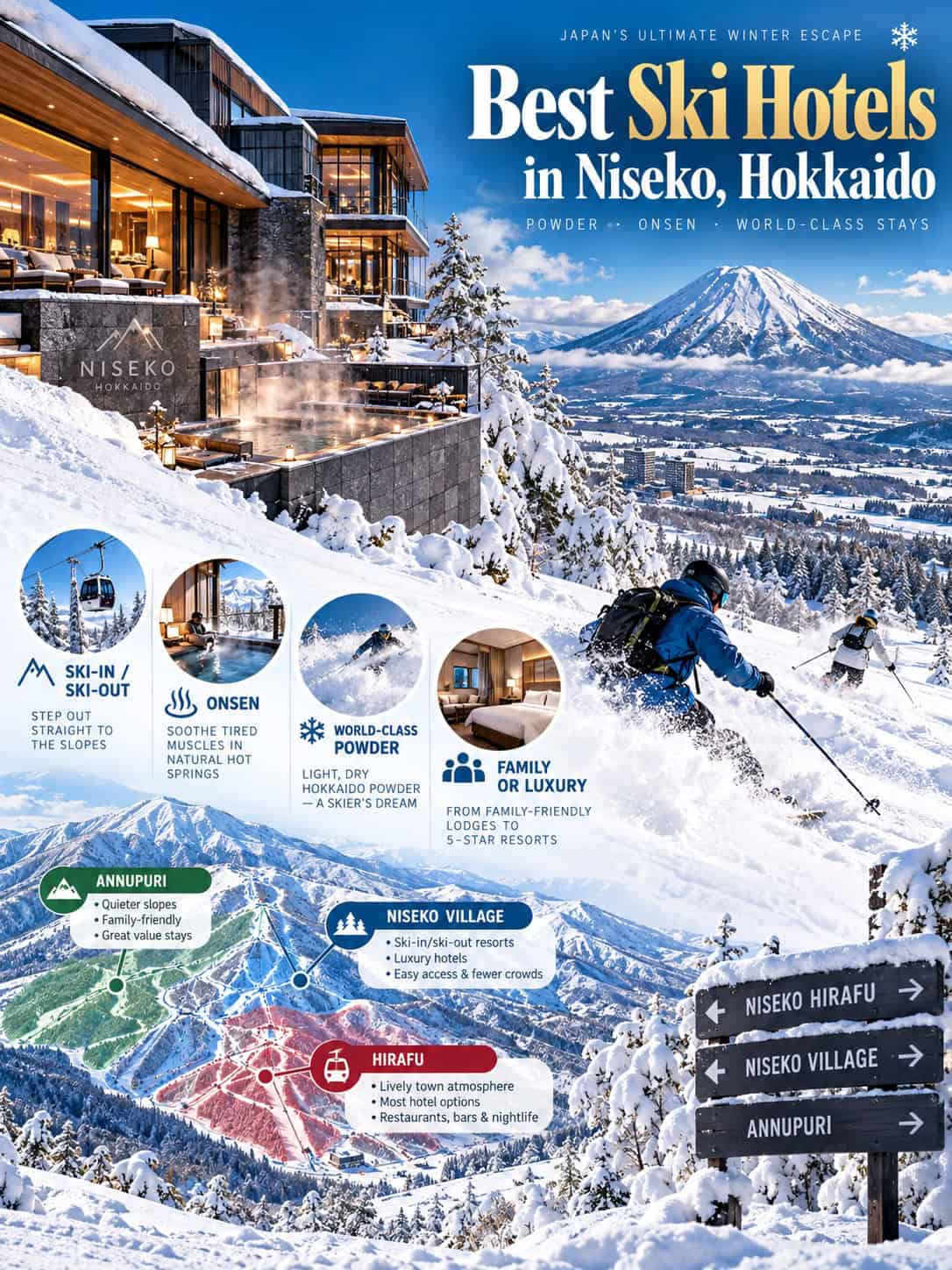
Niseko Hirafu is the liveliest of Niseko’s resort villages, with the densest concentration of restaurants, bars, and ski-in/ski-out lodging; Niseko Village and Annupuri offer a quieter, more spread-out alternative closer to their own lift bases.
How to Get to Hokkaido: Flights and Airport Train
New Chitose Airport (CTS) is Hokkaido’s main aviation gateway, though other airports such as Hakodate, Asahikawa, Kushiro and Memanbetsu also serve different regions. JR Hokkaido lists a one-way New Chitose–Sapporo Rapid Airport non-reserved fare of ¥1,230 and reserved fare of ¥2,230. Daytime service reaches as many as six trains per hour and takes roughly 33–43 minutes depending on service type. The reserved seats are in Car 4. Compare flight arrivals and airport transfer choices before purchase. Before booking, check Japan visa requirements for your passport.
From New Chitose Airport to Sapporo, Otaru and Niseko
New Chitose Airport Station connects directly to the basement floor of the terminal building, and the domestic terminal has a bus counter on the first floor with schedules for each route. Hokkaido Chuo Bus (red vehicles) and Hokuto Kotsu (green vehicles) pick up right outside the arrival gates, with two to four buses an hour to downtown Sapporo. Their stops include Odori Park, Sapporo Beer Garden for the Beer Museum, Miyanosawa Station for Shiroi Koibito Park, and Maruyama Bus Terminal for Maruyama Zoo and Mt. Moiwa. Tickets are sold at machines and at the ticket counter, and suitcases go in the bus trunk.
| Route | Option | What to know |
|---|---|---|
| Airport to Sapporo Station | JR train | About 40 minutes, from the station under the terminal |
| Airport to Otaru Station | JR train | About 1 hour 15 minutes |
Niseko Travel Guide: Getting There from Sapporo
Winter ski buses link Sapporo or New Chitose Airport with different Niseko villages, often taking 2.5–3.5 hours depending on road conditions and drop-off points. Fares and schedules are seasonal, so confirm them with the operator when booking. Road closures and snow can extend travel times. JR trains reach Niseko via Otaru and Kutchan, but connections are infrequent and Niseko Station is not beside the main Hirafu lifts. Plan a local bus or taxi for the final leg. Check rail service changes and the exact resort drop-off before choosing the train over a ski bus.
Sapporo to Niseko: Train, Ski Bus or Car?
| Transport | Typical planning time | Best for |
|---|---|---|
| Winter ski bus | About 2.5–3.5 hours | Direct resort drops; seasonal advance booking |
| JR via Otaru / Kutchan | Often 3+ hours plus local transfer | Rail travellers with flexible schedules |
| Rental car | Often 2.5–3.5 hours | Stops between destinations; winter driving experience essential |
| Private transfer | Varies with pickup and snow | Families or groups with skis and luggage |
For a rail journey, compare the final stop at Kutchan or Niseko Station with your accommodation. Ski-resort hotels can be far from the station, and winter bus schedules differ from summer transport.
Check train connections and tickets in Japan.
Sapporo Travel Guide: Trains, Subway and Walking
Central Sapporo is compact and easy to navigate on foot, helped by an extensive underground walkway network connecting Sapporo Station, Odori, and Susukino — useful in both winter snow and summer heat. Beyond walking distance, the city’s subway (Namboku, Tozai, and Toho lines) and a looping streetcar line cover most other attractions.
Sapporo Subway Passes and IC Cards
The two one-day tickets cover the subway only, so they do not work on the streetcar or buses. A national IC card is the simpler option for mixed trips, and the Donichika Ticket is the cheaper pass on weekends and holidays.
| Pass or card | Price | What it covers |
|---|---|---|
| One-day ticket for subway use | ¥830 adult, ¥420 child | Unlimited subway rides on any day; sold at subway ticket machines |
| Donichika Ticket | ¥520 adult, ¥260 child | Unlimited subway rides on Saturdays, Sundays, national holidays and December 29 to January 3 |
| Suica, PASMO, ICOCA, Kitaca and other national IC cards | Your own card balance | Subway, streetcar, Hokkaido Chuo Bus, Jotetsu Bus and JR Hokkaido Bus |
| SAPICA open card | ¥2,000 including a ¥500 deposit | Same networks as above; ¥1,500 is usable for fares and the deposit is refunded when the card is returned |
Best Time to Visit Hokkaido: Snow, Lavender and Autumn
Winter snow sports generally attract visitors from December into March, although individual ski lifts may operate beyond those months if snow and weather allow. The official 2027 Sapporo Snow Festival runs 4–11 February across Odori, Susukino and Tsudome. Entry to the three principal festival sites is free; some activities cost extra. Book lodging early for these fixed festival dates. Summer is usually milder than Tokyo or Osaka and is popular for Furano lavender, Biei landscapes, cycling and hiking. Lavender at Farm Tomita typically peaks around July, but flowering depends on weather and the field. In autumn, mountain foliage appears earlier than in southern Japan. Winter attractions and ropeways may close in shoulder periods, so confirm operating dates. Our guide to the best time to visit Japan compares the seasons.
Hokkaido Weather by Travel Season
| Period | What to visit | Watch for |
|---|---|---|
| Dec–Mar | Niseko skiing, Sapporo snow sights | Snow disruption, icy roads, high hotel demand |
| Apr–May | Late blossom, city walks, spring scenery | Variable snow and hiking trail closures |
| Jun–Aug | Furano lavender, Biei, parks and hiking | Peak summer lodging and insects |
| Sep–Nov | Autumn foliage, hot springs, food trips | Early mountain snow and seasonal shutdowns |
The 2027 Sapporo Snow Festival will run 4–11 February, with free entry to Odori, Tsudome and Susukino sites. Odori snow sculptures are generally illuminated until 10 PM. Plan hotels and evening transportation well ahead of time.
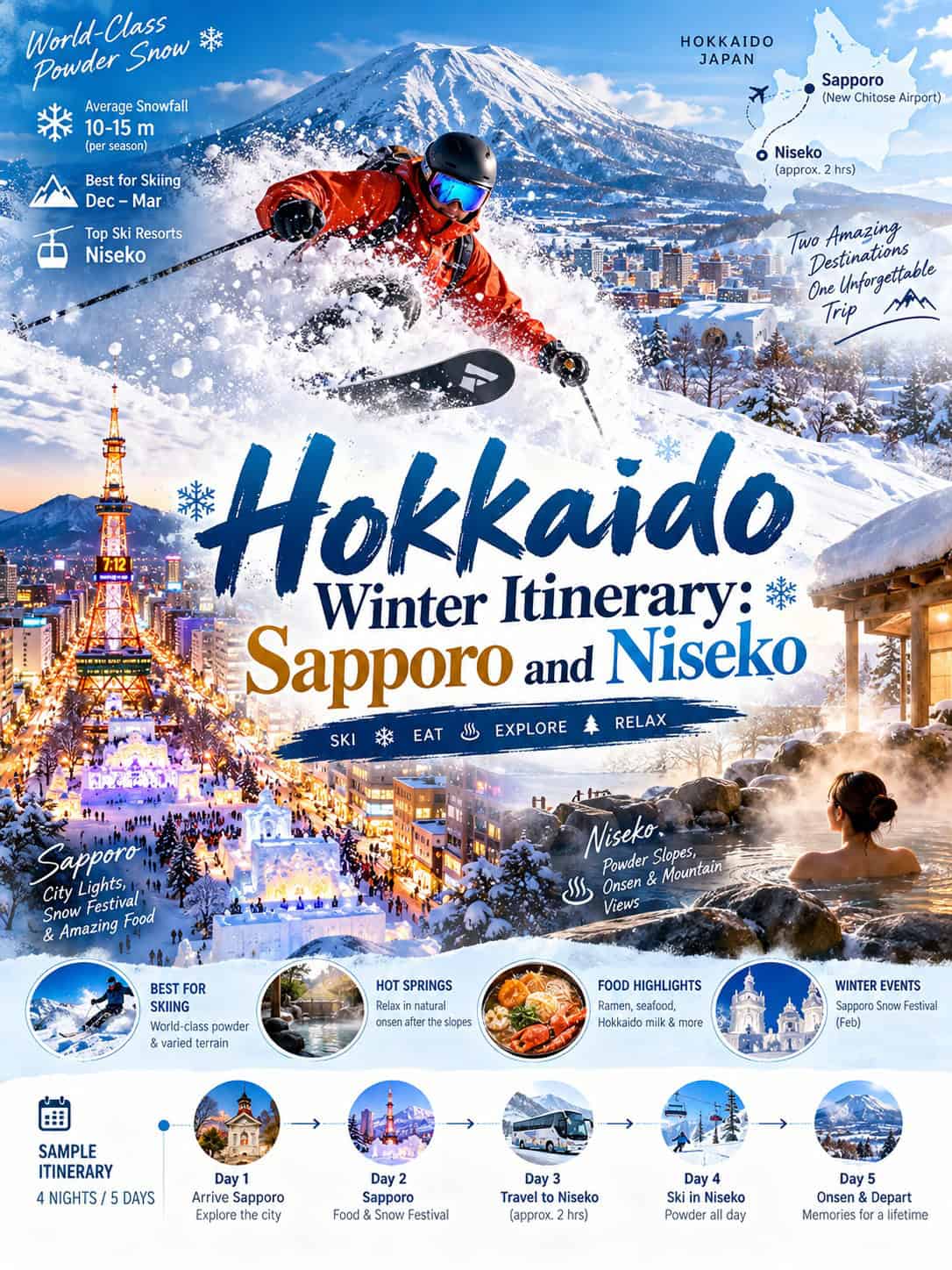
Things to Do in Hokkaido: Five-Day Sapporo and Niseko Plan
Day 1 — Central Sapporo: Odori Park, the Clock Tower, and Susukino in the evening.
Day 2 — Sapporo’s Edges: Shiroi Koibito Park or the Sapporo Beer Museum in the daytime, Mt. Moiwa Ropeway for the night view.
Day 3 — Otaru Day Trip: the canal town’s historic warehouses and glassware shops (see below), back to Sapporo in the evening.
Days 4-5 — Niseko: travel to Niseko and spend the remaining time skiing, soaking in an onsen, or — outside winter — hiking and exploring the Niseko United resort villages.
This is a deliberately compact starting template — a dedicated ski trip typically extends the Niseko portion to 4-5 days on its own.
If It Rains or Snows: Plan B for Sapporo Days
The Moiwa ropeway stops in bad weather and the night view disappears in cloud, so swap that evening for the Sapporo Beer Museum, open until 6:00pm with last entry at 5:30pm. Shiroi Koibito Park is the other option, as long as you enter the paid area by the last admission at 4:30pm, and the Beer Museum tasting tour requires a reservation, so book it ahead. The Clock Tower is a short indoor stop near Odori Park. In heavy snow, use the underground walkway between Sapporo Station, Odori and Susukino.
Things to Do in Hokkaido: Otaru Day Trip
Otaru makes an easy day trip from Sapporo for canal scenery, glass studios, music boxes and seafood. JR Hokkaido lists ¥800 for the non-reserved Sapporo–Otaru one-way journey, with trains often taking around 35–50 minutes. The canal and historic district are walkable from Otaru Station; allow more time in snowy conditions.
Otaru Orgel Doh, the music box shop, keeps its main building and its Hall Number 2 Antique Museum open from 9:00am to 6:00pm with no regular closing day, so it works as a dry stop on a rainy afternoon.
Things to Do in Hokkaido Beyond Sapporo and Niseko
Furano and Biei: Summer Flower Fields
Furano offers lavender and other summer flowers; Biei is known for rolling countryside and the Blue Pond. Peak lavender often occurs in July, but the precise timing shifts with the weather. Renting a car may simplify reaching separated sites, while seasonal buses and rail services require timetable planning.
Hakodate: Night View and Historic Fort
Hakodate offers the Mount Hakodate viewpoint, Goryokaku Park and an early-morning seafood market. Give it at least one night if you want the city view after dark. The city is not a short Sapporo day trip.
The Mount Hakodate ropeway takes about three minutes to reach the summit. The adult fare is ¥1,800 round trip or ¥1,200 one way, and the child fare is ¥900 round trip or ¥600 one way; children up to 2 ride free. The first car leaves at 10:00. The last car up leaves at 9:30pm from April 20 to September 30 and at 8:30pm from October 1 to April 19, and the last car down leaves 30 minutes later. Hours can change with the weather.
Shiretoko and Eastern Hokkaido: Wildlife and National Parks
Shiretoko is a UNESCO World Heritage area with bear habitat, sea cliffs and seasonal walks. At Shiretoko Five Lakes, hiking requires a guide from May 10 to July 31, when brown bears are most active, so book a guided tour with an operator in advance. The elevated wooden path as far as Lake Ichiko, the first lake, can be walked without a guide. Never approach wild bears. The wider east includes Lake Akan, Lake Mashu and Kushiro wetlands.
Lake Toya and Noboribetsu: Onsen and Volcanoes
Lake Toya and Noboribetsu make practical hot-spring additions to a central Hokkaido itinerary. Noboribetsu’s Jigokudani has active geothermal steam vents and marked paths. Respect barriers and check bus service before planning a no-car visit.
Hokkaido Travel Guide: What to Eat
Hokkaido is widely considered one of Japan’s best food regions, built on cold-water seafood and dairy that the rest of the country imports. Sapporo-style miso ramen is a local invention and a near-mandatory stop, as is soup curry, which also originated in the city. Fresh crab, uni, and salmon roe are everywhere from Nijo Market to Susukino’s restaurants, and Jingisukan (grilled lamb, traditionally cooked on a dome-shaped skillet at the table) is a Hokkaido specialty worth seeking out. Hokkaido’s milk, butter, cheese, and soft-serve ice cream are also noticeably richer than what’s typical elsewhere in Japan, a byproduct of the island’s dairy farming. For dishes across the country, see our Japanese food guide.
Hokkaido Travel Guide: Practical Costs and Safety
Hokkaido’s winters are genuinely cold and icy underfoot — proper winter boots with grip matter more here than almost anywhere else in Japan, especially walking between Sapporo’s subway exits and street level. If a Niseko ski trip is part of the plan, booking lift tickets, lessons, and especially accommodation well in advance is strongly recommended, since the resort villages fill up fast during peak powder season (late December through February). Outside the ski season, Niseko is considerably quieter and some lodging and restaurants scale back their hours or close entirely, so confirming opening dates before building a summer itinerary around the area is worthwhile. Our Japan packing list covers cold-weather layers.
Driving in Hokkaido: Rules That Matter in Winter
Cars drive on the left, everyone in the car must wear a seatbelt, and using a phone while driving is illegal. In snowy areas a car needs winter tires or tire chains, so ask for a winter-equipped car when you book. Rental insurance is mandatory, expressway tolls are paid with an ETC card from the rental company, and the car must be refueled before it is returned. Walk around the car with the rental staff before leaving to record any scratches or dents.
Hokkaido Travel Guide: Transport and Sightseeing Budget
| Example expense | Fare or calculation |
|---|---|
| CTS Airport–Sapporo, non-reserved | ¥1,230 one way |
| CTS Airport–Sapporo, reserved | ¥2,230 one way |
| Sapporo–Otaru, non-reserved | ¥800 one way |
| Mount Moiwa full return | ¥2,100 |
| Shiroi Koibito Park paid area | ¥1,200 |
| Example: airport return + Otaru return + Moiwa + Shiroi | ¥7,360 per adult using non-reserved trains |
This ¥7,360 example covers only the named trains and two attractions. It excludes hotels, food, local subway rides and seasonal lift passes. Prices are published tariffs and can change; recheck before travelling.
Hokkaido Travel Guide: Arrival and Connectivity
New Chitose Airport serves the Sapporo region. The Rapid Airport train is convenient for central Sapporo, while a prearranged road transfer may work better for late arrivals, families or Niseko accommodation. Local weather can disrupt both rail and road schedules.
Compare Hokkaido airport transfers. For navigation and rail apps, compare Japan eSIM data packages before departure.
Hokkaido Travel Guide: Seven-Day Route by Season
Winter: Days 1–3 Sapporo and Otaru; days 4–7 Niseko for skiing and onsen. During 4–11 February 2027, reserve Sapporo hotels early for the Snow Festival. Visiting in snow season? See our Hokkaido winter itinerary.
Summer: Days 1–3 Sapporo and Otaru; days 4–5 Furano/Biei flower fields; days 6–7 Lake Toya and Noboribetsu. Avoid trying to add Shiretoko to this seven-day loop without replacing several stops.
Things to Do in Hokkaido: Frequently Asked Questions
How many days do I need for Hokkaido?
Three to four days covers Sapporo and a day trip to Otaru at a comfortable pace. Adding a Niseko stay, even a short one, pushes a well-rounded trip to five to seven days.
Do I need a car to visit Niseko?
No — direct winter ski buses and trains via Otaru both reach Niseko without a car, and once there, resort shuttle buses connect the main villages and lift bases. A car adds flexibility but isn’t required, and winter driving conditions in the area can be challenging for visitors unused to snow and ice.
Is Sapporo expensive compared to Tokyo?
Prices depend heavily on dates and location. Niseko’s Hirafu accommodation can be expensive during December–February, while Sapporo often provides a wider range of budget hotels and restaurants. Compare identical booking dates rather than assuming a fixed difference from Tokyo.
Is Hokkaido worth visiting outside winter?
Yes — summer is usually milder than Tokyo or Osaka, with hiking, cycling and outdoor activities around Niseko that aren’t available once the snow arrives, plus Furano lavender and Biei’s farmland. Many travelers choose Hokkaido in July and August to escape some of the heat and humidity further south.
What are the best things to do in Hokkaido in summer?
Explore Furano lavender, Biei’s Blue Pond, Otaru, scenic national parks and Niseko’s hiking trails. Flowering dates change each year.
When is the next Sapporo Snow Festival?
The official dates are 4–11 February 2027. Entry to the three main sites is free, although some activities may charge.
How much is the train from New Chitose Airport to Sapporo?
JR Hokkaido lists ¥1,230 for a non-reserved one-way seat and ¥2,230 for a reserved seat.
How much does Shiroi Koibito Park cost?
The paid area costs ¥1,200 for adults and ¥600 for children aged 4 through junior high school. The free area does not require admission.
Is Hokkaido worth visiting without skiing?
Yes. Sapporo food, Otaru, Hakodate, Furano/Biei, hot springs and eastern national parks offer year-round alternatives, with seasonal access restrictions.
Can I visit Furano and Niseko in five days?
It is possible with a car and a tight schedule, but a five-day Sapporo–Niseko plan leaves limited time for Furano. Focus on one or two regions rather than every destination.
What is the difference between Niseko Hirafu and Annupuri?
Hirafu has more restaurants, bars and hotels, while Annupuri typically feels quieter. Both belong to Niseko United, but confirm lift links and operating dates.
Can I use the JR Pass for every Hokkaido journey?
No. A rail pass cannot replace separate ski buses, taxis or many private transport services. Compare pass coverage with actual train fares before purchasing; our Japan Rail Pass guide explains the details.
Things to Do in Hokkaido: Best Route by Season
Sapporo and Niseko make a natural pair precisely because they’re so different — one a walkable, food-focused small city, the other a wide-open snow resort region three hours away. Anchor a trip around whichever one matches the season, and let the other fill out the days on either side.