By Nippon With Me EditorialPublished Updated
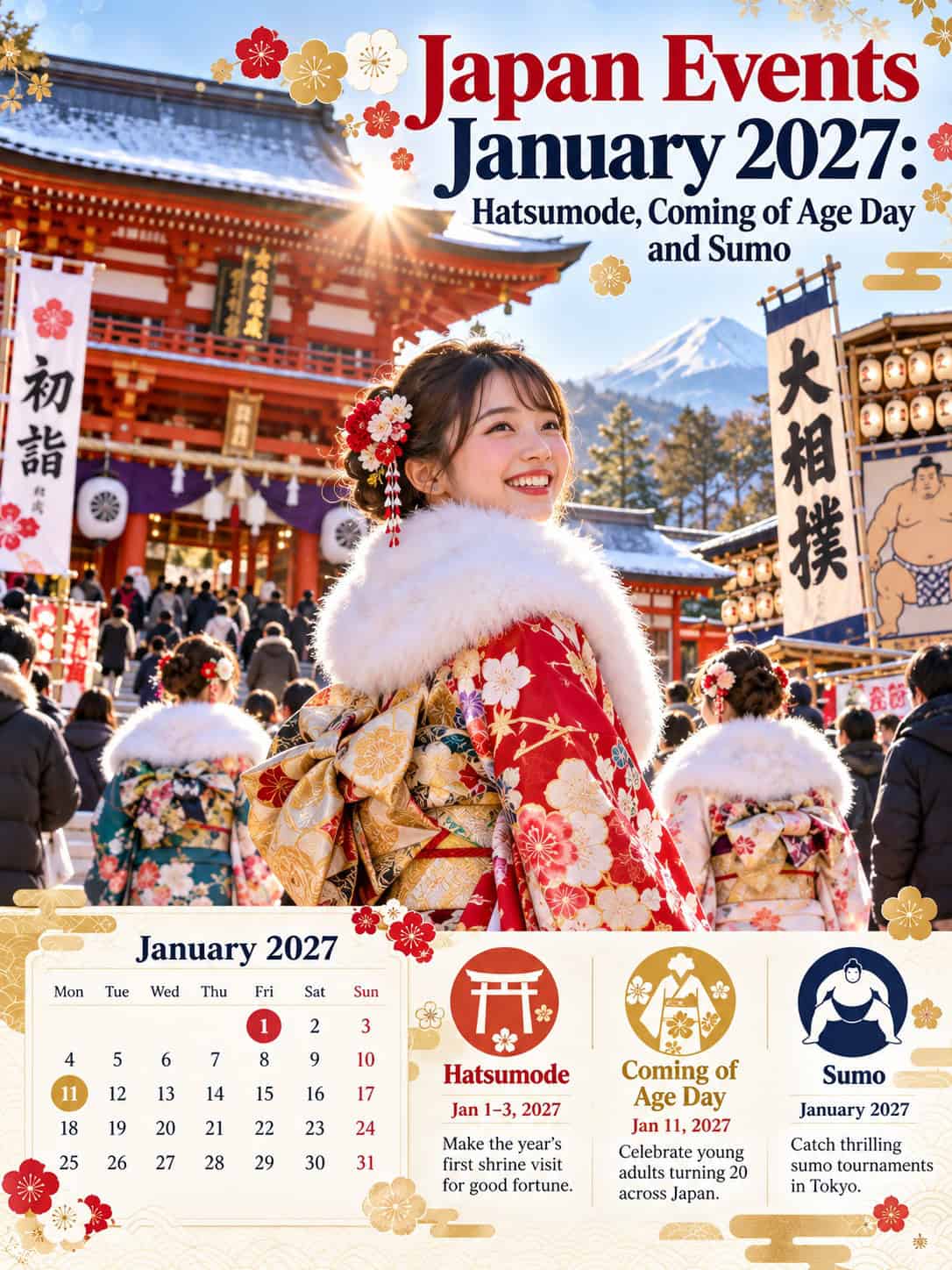
Things to do in Japan in January include Hatsumode shrine visits, Coming of Age Day ceremonies, and Tokyo’s first Grand Sumo tournament. Visitors can also discover traditional winter festivals in Osaka and Nagano. After December’s quiet, January is dense — arguably the single richest month on the calendar for travelers who want to see Japan’s own New Year, not a tourist version of it. For the preceding season, see our December festival calendar.
Things to Do in Japan in January at a Glance
| Date | Event | Location | Type | Tourist Relevance |
|---|---|---|---|---|
| Jan 1–3 (Fri–Sun) | Hatsumode (New Year’s First Shrine Visit) | Shrines and temples nationwide | Traditional / Religious | High — Japan’s single most-observed annual tradition |
| Jan 6 (Wed) | Dezomeshiki (New Year Fire Review) | Tokyo (Ariake, Koto City) | Traditional / Ceremony | Medium — Edo-era firefighter acrobatics; ceremony seating by advance application only, outdoor exhibition free |
| Jan 10–24 | Grand Sumo January Tournament (Hatsu Basho) | Ryogoku Kokugikan, Tokyo | Sport | High — first of the year’s six official tournaments |
| Jan 9–11 | Toka Ebisu Festival | Imamiya Ebisu Shrine, Osaka | Traditional / Festival | Medium — one of the liveliest, least-touristy local festivals on the calendar |
| Jan 11 (Mon) | Coming of Age Day (Seijin no Hi) | Nationwide | Public Holiday | High — 20-year-olds in furisode kimono at shrines and ceremonies citywide |
| Jan 15 (Fri) | Nozawa Onsen Dosojin Fire Festival | Nozawa Onsen, Nagano | Traditional / Festival | Medium-High — dramatic fire ritual, fixed date every year |
| Jan 29–Feb 7* | Kobe Luminarie (opening week) | Kobe, Hyogo | Seasonal / Illumination | Medium — the month’s final days overlap with its opening |
*Kobe Luminarie’s 2026–2027 edition runs January 29 through February 7, 2027, so only its first few nights fall inside January — most of its run, and the fuller write-up, belongs to February. Listed here because travelers arriving in Tokyo or Kansai in the last days of January can still catch its opening.
1. Hatsumode: New Year’s First Shrine Visit (January 1–3)
When: officially January 1–3, though visits continue in smaller numbers through the rest of the month. Where: literally every shrine and temple in the country, from tiny neighborhood shrines to the biggest names — Meiji Jingu (Tokyo), Fushimi Inari (Kyoto), Sumiyoshi Taisha (Osaka). What it is: the year’s first visit to a shrine or temple to pray for good fortune, widely considered Japan’s most universally observed tradition — more people take part in Hatsumode than in any single other annual event in the country. Stalls selling amazake, grilled mochi and New Year’s charms line the approach to major shrines, and the atmosphere is festive rather than solemn. Tip: Meiji Jingu alone draws several million visitors over the three days, with queues running hours long on January 1 itself — visiting a major shrine on January 2 or 3 instead of New Year’s Day itself, or picking a smaller well-regarded shrine, gets the same experience with a fraction of the wait.
2. Coming of Age Day / Seijin Shiki (January 11)
When: the second Monday of January — January 11, 2027, which makes January 9–11 a three-day weekend. New Year’s Day (January 1) is the month’s other national holiday. Where: city halls and shrines nationwide, with ceremonies most visible in city centers. What it is: a national holiday marking the coming-of-age of everyone who turned (or will turn) 20 in the past year. Young women turn out in elaborate furisode kimono with fur stoles, young men in formal suits or hakama, for official ceremonies followed by shrine visits and photos with friends in matching groups. It’s one of the most photogenic single days in the Japanese calendar precisely because it isn’t staged for tourists — it’s a real rite of passage, repeated in almost identical form in every city simultaneously. Tip: Asakusa, around Sensoji, is one of the most reliable places to see large groups of celebrants in full dress without needing an invitation to a specific ceremony — arrive mid-morning, and as always, photograph respectfully rather than approaching groups uninvited.
3. Grand Sumo January Tournament — Hatsu Basho (January 10–24)
When: January 10–24, 2027, a 15-day tournament. Where: Ryogoku Kokugikan, Tokyo’s main sumo stadium, a one-minute walk from Ryogoku Station. What it is: the first of the year’s six honbasho, and the only one of the three Tokyo tournaments held in winter — the symbolic start of the sumo year, with new rank announcements from the previous November’s results carrying extra weight. Lower-ranked wrestlers take the ring from late morning, with the top-division bouts running early evening. Tip: this is the easiest of the year’s Tokyo tournaments to build a trip around, since it lands square in the New Year travel window — check the official ticket channels early for the dates and seating you want. General advance sales open in early December, and admission prices are revised starting with this tournament.
4. Toka Ebisu Festival (January 9–11)
When: January 9–11 every year. Where: Imamiya Ebisu Shrine, Osaka (also observed, on a smaller scale, at Ebisu shrines elsewhere in the Kansai region). What it is: a festival honoring Ebisu, the god of fortune and prosperity in business, drawing over a million visitors across the three days — overwhelmingly local, with shopkeepers and business owners buying fukuzasa (lucky bamboo branches decorated with charms) to hang in their stores for the year ahead. The atmosphere is loud, commercial and genuinely local in a way few festivals this accessible manage to stay. Tip: January 10, the main day, is also the busiest — January 9 (Yoi-Ebisu, the eve) or January 11 (Nokori-fuku, the closing day) both offer a calmer version of the same festival with shorter queues for the fukuzasa stalls.
5. Nozawa Onsen Dosojin Fire Festival (January 15)
When: January 15 every year — the date is fixed regardless of the day of the week. Where: Nozawa Onsen, a hot spring and ski village in Nagano Prefecture. What it is: one of Japan’s three great fire festivals, in which villagers build a large wooden shrine structure and 42- and 25-year-old men (ages considered unlucky in Japanese tradition) defend it against the rest of the village trying to set it alight with torches, ending when the structure is deliberately burned to the ground in a massive bonfire. It’s raucous, physical and unmistakably not staged for an audience, even though visitors can watch as observers. At the most recent festival the fire attack site was limited to ticket holders, with tickets going only to village residents and guests staying in the village, so ask your lodging. The sacred tree is pulled out on January 13 and the shrine structure assembled on January 14; the fire attack began around 8:30 p.m. and wound down around 10:00 p.m. Tip: Nozawa Onsen is also a working ski resort in January, so the festival pairs naturally with a ski or onsen day — book accommodation well ahead, since the village is small and the date is fixed and well known.
More Things to Do in Japan in January
Dezomeshiki, Tokyo’s New Year Fire Review, runs every January 6 — Tokyo Fire Department companies parade in Edo-period firefighter dress, culminating in hashigo-nori acrobatics performed on tall bamboo ladders, a tradition traced directly back to Edo-era firefighting brigades. The 2027 ceremony is at Tokyo Waterfront Disaster Prevention Park in Ariake, Koto City (doors 9:00 a.m., ceremony 10:00 a.m. to about noon), with seating by advance application only: online applications close November 9 at 11:59 p.m., a lottery follows with results in early December, and there are no same-day seats. A free exhibition runs 10:00 a.m.–3:00 p.m. at Ariake Garden. There is no parking, so use public transit. At the very end of the month, Kobe Luminarie opens on January 29 for its 2026–2027 run — only its first handful of nights fall in January, with the bulk of the display and a full write-up belonging to February’s calendar, but travelers in Kansai in the last days of the month can catch its opening without waiting for February. Venues are Meriken Park, Higashi Yuenchi and the former foreign settlement; part of Meriken Park is a paid area (advance tickets ¥500 on weekdays and ¥750 on weekends and holidays; day-of tickets ¥1,000 and ¥1,500). Plan ahead with our February events guide.
Where to Stay: Things to Do in Japan in January
For Hatsumode at a major Tokyo shrine and the Coming of Age Day crowds in Asakusa, staying in central Tokyo — Asakusa itself, or Ueno for easy access to Sensoji — covers the month’s biggest Tokyo draws without much travel. For the Grand Sumo Tournament, Ryogoku itself or nearby Kinshicho puts the Kokugikan a short walk or one stop away. For more local activities, explore our Tokyo travel guide. For Toka Ebisu, central Osaka (Namba or Shinsaibashi) keeps Imamiya Ebisu Shrine within a short subway ride. For the Nozawa Onsen Fire Festival, there’s no substitute for staying in the village itself — it’s a small destination built around the festival and the surrounding ski season, not a day-trip target.
Which Things to Do in Japan in January Come First?
Hatsumode is the one event on this list that essentially happens around every traveler in Japan during the first few days of January whether they seek it out or not — visiting any shrine in those first three days counts, and a major one is worth the modest queue. Coming of Age Day is the single best “right place, right time” event of the month for photography and genuine cultural texture, and needs no ticket or booking. The Grand Sumo Tournament and Toka Ebisu both reward travelers already in Tokyo or Osaka respectively rather than being reasons to restructure an itinerary on their own. The Nozawa Onsen Fire Festival is the one worth a dedicated trip — it’s unlike anything else on this list, but only for travelers already planning a Nagano or ski-region leg of their journey.
Bottom Line
January 2027 is Japan’s New Year month in the fullest sense — not a single headline event but a dense run of genuinely traditional occasions, from Hatsumode’s nationwide shrine visits through Coming of Age Day’s kimono-filled streets to the raucous fire ritual at Nozawa Onsen. Build a January trip around whichever of these feels most distinctly Japanese to you — all of them are real, all of them are free or nearly so, and none of them were built for tourists.
FAQ: Things to Do in Japan in January
Is Hatsumode one of the best things to do in Japan in January?
Hatsumode is the year’s first shrine or temple visit, traditionally made January 1–3. Tourists are welcome to take part at any shrine and can simply follow ordinary shrine-visit etiquette — no special preparation is required.
How do I book Japan’s January sumo tournament?
Check the official sumo ticket channels for advance sales and current seating options. Do not assume same-day unreserved tickets will be available.
Are things to do in Japan in January crowded?
The first few days of January are busy around major shrines for Hatsumode, but overall January is one of Japan’s quieter tourist months, with lower hotel prices outside the New Year week itself.
What weather affects things to do in Japan in January?
Yes, in most of Honshu including Tokyo, though Okinawa stays mild. Hokkaido and areas like Nozawa Onsen are cold and often snow-covered, which is part of their winter appeal.