By Nippon With Me EditorialPublished Updated
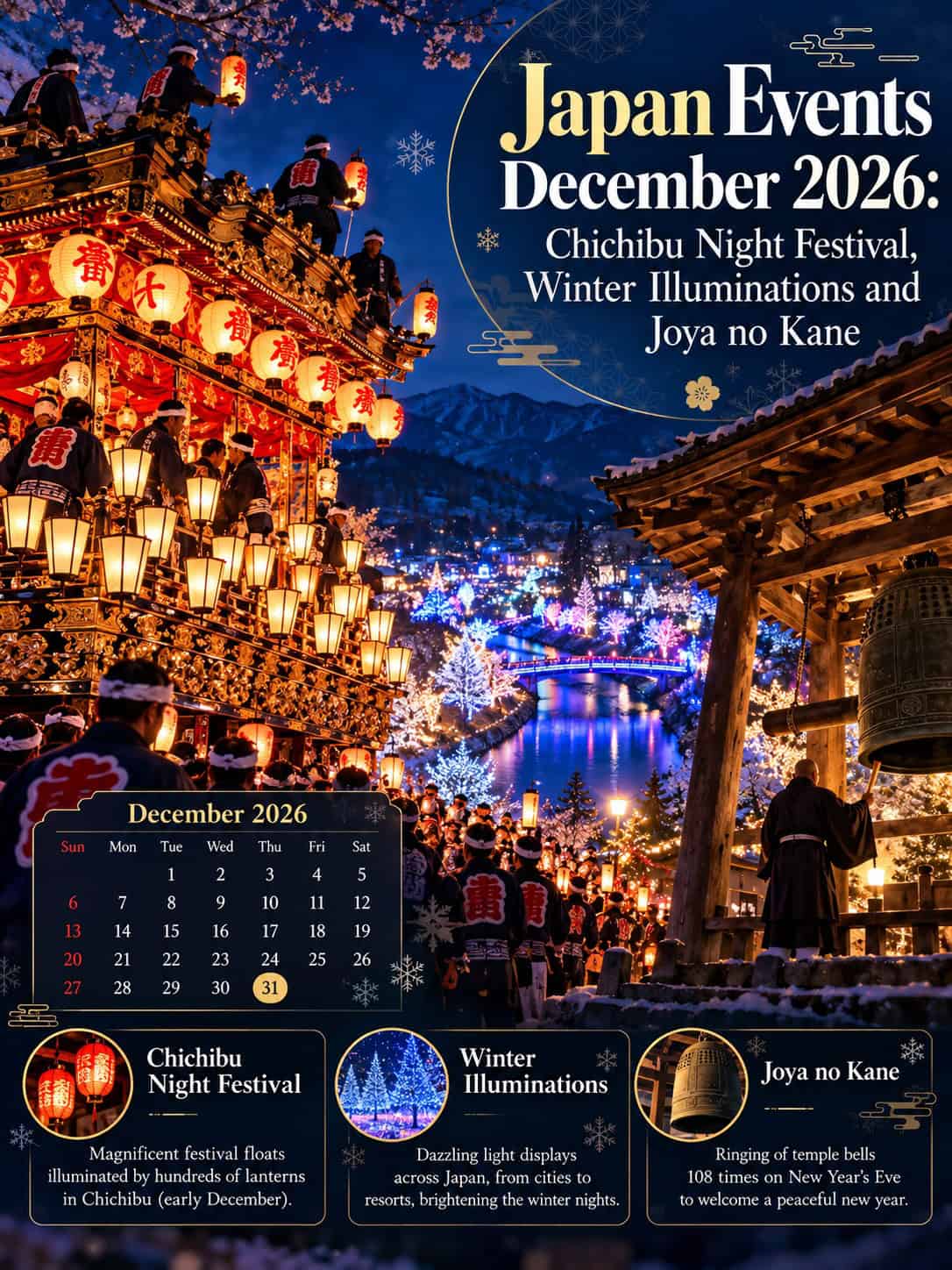
Things to do in Japan in December include the Chichibu Night Festival, Tokyo winter illuminations, and New Year’s Eve temple ceremonies. December has no national public holidays, but seasonal events attract visitors across Japan. There’s no long weekend to build a trip around this month, but there’s more than enough to fill one.
Things to Do in Japan in December at a Glance
| Date | Event | Location | Type | Tourist Relevance |
|---|---|---|---|---|
| Dec 2–3 (Wed–Thu) | Chichibu Night Festival | Chichibu, Saitama | Traditional / Festival | High — float parade and fireworks, one of Japan’s three great “hikiyama” float festivals |
| Nov 5–Dec 25 (ongoing) | Roppongi Hills Christmas Illuminations | Tokyo (Roppongi) | Seasonal / Illumination | Medium — several linked illuminations plus a Christmas market |
| Nov 12–Feb 14 (ongoing) | Marunouchi Illumination | Tokyo (Marunouchi, near Tokyo Station) | Seasonal / Illumination | Medium — 1.2km of champagne-gold lights, easy to combine with a station stop |
| Oct 17–May 31 (peak in Dec) | Nabana no Sato Winter Illumination | Kuwana, Mie | Seasonal / Illumination | High — widely considered Japan’s largest and most elaborate illumination |
| Dec 17–19 | Hagoita-Ichi Fair | Sensoji Temple, Asakusa, Tokyo | Traditional / Market | Medium — decorative paddle market with centuries of history |
| Dec 25 (Fri) | Christmas Day | Nationwide | Cultural (not a public holiday) | Low–Medium — a date-night and illumination occasion, not a day off work |
| Dec 31 (Thu) | Joya no Kane (New Year’s Eve temple bells) | Buddhist temples nationwide | Traditional / Religious | High — 108 bell tolls at midnight, open to the public at many temples |
Note on the Hagoita-Ichi Fair: Sensoji lists the market for December 17–19, with several dozen stalls in the temple grounds. The temple does not post stall hours online; call 03-3842-0181 (Monday–Saturday, 9:00 a.m.–4:30 p.m.) to ask.
1. Chichibu Night Festival (December 2–3)
When: December 2 (eve) and December 3, 2026 (main festival) — these dates are fixed every year. Where: central Chichibu, Saitama Prefecture, around Chichibu Shrine and Chichibu Station. What it is: one of Japan’s three great hikiyama float festivals (alongside Kyoto’s Gion Matsuri and Takayama’s own autumn festival), where enormous wooden floats — some over 10 meters tall and weighing several tons — are hauled by hand through the streets by teams in traditional dress, accompanied by flute and drum music. The festival closes with a large fireworks display timed to the floats being pulled up a steep slope near the shrine, a combination unique to Chichibu. Tip: December 3 attracts large crowds. Check return train times with the rail operators and allow extra time to reach the station. Traffic restrictions apply in Chichibu on both days, and parking near the festival area fills early. Watching the floats climb the Dangozaka slope is nearly impossible without a reserved paid seat, which the Chichibu Tourism Association handles; for the fireworks alone, the areas in front of Seibu-Chichibu Station, Chichibu Station, the Civic Hall and along National Route 140 are recommended. The Chichibu Festival Museum is open until 8 p.m. on December 2 and until 9 p.m. on December 3. The float parade schedule and fireworks times for 2026 are not yet posted.
2. Tokyo’s Winter Illumination Season
When: Marunouchi Illumination runs November 12, 2026 through February 14, 2027; Roppongi Hills’ illuminations run from November 5 (Keyakizaka) or November 13 (66 Plaza and Mohri Garden) through December 25. Where: Marunouchi-Nakadori Avenue near Tokyo Station (about 1.2km of champagne-gold lights), and the Roppongi Hills complex (Keyakizaka Illumination, lit 5–10 p.m.; 66 Plaza, lit 5 p.m. to midnight; Mohri Garden, lit 5–11 p.m.; plus a Christmas market at Oyane Plaza, open 11 a.m.–9 p.m. from November 21; all of it ends December 25). What it is: Tokyo’s two most central, easiest-to-reach winter light displays, both free to walk through, with Marunouchi lit 4–11 p.m. (until midnight in December), and both built around year-end shopping and dining districts rather than standalone ticketed events. Tip: Marunouchi connects directly to Tokyo Station, making it an easy add-on for anyone passing through on the Shinkansen; Roppongi Hills is the better pick if you also want a Christmas market and food stalls alongside the lights.
3. Nabana no Sato Winter Illumination
When: the 2026–2027 edition runs October 17, 2026 through May 31, 2027, with December widely regarded as one of its best viewing windows alongside January. Where: Nabana no Sato, a flower park in Kuwana, Mie Prefecture — roughly 40 minutes by train and bus from Nagoya. What it is: frequently ranked as Japan’s largest and most elaborate winter illumination, built around a different large-scale themed display each year (tunnels of light, reflecting ponds, a huge light-covered “wall” installation) across the park’s grounds. Tip: the park closes January 6–7 for maintenance, and date-designated advance tickets, sold first come, first served at convenience stores, are required from 3 p.m. to 11 p.m. on December 23–25, and tickets may not be available at the gate — book ahead if your trip falls in that window. It’s a genuine day-trip destination from Nagoya rather than a quick stop, so budget half a day.
4. Hagoita-Ichi Fair (December 17–19)
When: December 17–19, following the fair’s traditional annual dates. Confirm stall hours before visiting. Where: the grounds of Sensoji Temple, Asakusa, Tokyo. What it is: a market selling hagoita — ornately decorated wooden paddles traditionally used in a New Year’s game similar to badminton, though the elaborate modern versions sold here are bought as decorative good-luck items rather than for play, often featuring the faces of kabuki actors, sumo wrestlers or pop-culture figures built up in raised fabric relief. The fair has run at Sensoji for centuries and is one of the most distinctly Japanese, least-touristy market events still easy for visitors to reach. Tip: hagoita prices vary by size and decoration — it’s a browsing and photography stop even if you don’t buy, and it pairs naturally with Sensoji’s famous Nakamise shopping street a short walk away. December 18 is Osame no Kannon, the year’s last Kannon festival day, when the temple sees especially heavy visitor numbers; buyers receive a traditional three-beat hand clap with each purchase.
5. Joya no Kane (December 31)
When: the night of December 31, continuing into the first minutes of January 1. Where: Buddhist temples nationwide; some of the best-known public ceremonies are in Kyoto, at temples like Chion-in and Kiyomizu-dera. What it is: temples across Japan ring their large bronze bells 108 times, a number tied to the 108 worldly desires or defilements in Buddhist teaching that the ringing is meant to cleanse before the new year begins. At many temples, visitors can line up to ring the bell themselves, usually for the earlier tolls before midnight; the final tolls around midnight draw the largest crowds. Tip: this is the natural, date-certain closer for any December trip — larger temples publish approximate queue times for public ringing closer to the date, and arriving an hour or so before midnight is typically enough to see the ceremony even without ringing the bell yourself. At Sensoji in Asakusa, members of a local group ring the bell on Benten Hill starting at midnight; the 108 strokes take about 40 minutes, and the crowd watches and applauds when the new year arrives rather than ringing.
More Things to Do in Japan in December
December is one of only two months of the year with no national public holiday in Japan (June is the other) — a genuinely useful thing to know when planning, since there’s no single long weekend pulling domestic crowds to any one place, which can make December travel calmer away from the specific events above. Compare the preceding month in our November festival calendar. Christmas Day (December 25) is a normal working day in Japan rather than a holiday; it functions socially more like a date-night and family-illumination occasion than a religious one, which is part of why the illumination season above runs straight through it. See our January events guide for Hatsumode and winter festivals. Christmas Eve and Day illuminations and markets at other major venues — Tokyo Midtown, Shibuya, Yokohama’s waterfront — run on broadly similar November-to-December windows to Marunouchi and Roppongi Hills, so if your hotel is near a different district, it’s worth checking that area’s own illumination dates rather than detouring across the city. For official event listings and travel updates, see the Japan National Tourism Organization.
Where to Stay for Things to Do in Japan in December
For Chichibu Night Festival, basing yourself in central Tokyo and taking a day/evening trip out on the Seibu-Chichibu line works well — Chichibu itself has limited lodging and the main crowds clear out on the last trains. For Marunouchi Illumination, staying near Tokyo Station or Otemachi puts the full illumination route and Tokyo Station itself within walking distance. For the Roppongi Hills illuminations and Christmas market, Roppongi or nearby Azabu-juban keep you inside the display without a late-night transit connection. Explore more neighborhoods in our Tokyo visitor guide. For Nabana no Sato, central Nagoya is the practical base — it’s a dedicated half-day trip from there rather than a Tokyo day trip. For the Hagoita-Ichi Fair and Joya no Kane in Tokyo, Asakusa itself is the obvious choice: Sensoji hosts both events a short walk from most of the neighborhood’s hotels.
Top Things to Do in Japan in December
If only one dated event fits the trip, Chichibu Night Festival is the strongest pick — it’s a real, centuries-old float festival with fireworks, not a seasonal lighting display, and December 2–3 are fixed dates every year with no confirmation risk. Travelers already staying in central Tokyo get Marunouchi Illumination and the Hagoita-Ichi Fair essentially for free, with no detour required. Nabana no Sato is worth the dedicated Nagoya day trip specifically for travelers who want the best illumination in Japan and don’t mind spending a half-day getting there. Joya no Kane is the easiest highlight of all to catch for anyone already in Japan on December 31 — it needs no ticket, no booking, and no detour beyond walking to the nearest participating temple.
Bottom Line
December 2026 trades Japan’s long weekends for its biggest light displays and two of its most genuinely traditional, least-staged public events: the Chichibu Night Festival’s floats and fireworks, and the quiet ceremony of Joya no Kane at year’s end. Anchor a December trip around whichever of those two feels right, and let Tokyo’s illuminations and the Hagoita-Ichi Fair fill the days around them.
FAQ: Things to Do in Japan in December
Are illuminations among the best things to do in Japan in December?
Nabana no Sato in Mie Prefecture is frequently ranked as Japan’s largest and most elaborate, while Tokyo’s Marunouchi and Roppongi Hills displays are the most convenient for travelers based in the capital.
Are free things to do in Japan in December available?
Yes — the Marunouchi and Roppongi Hills illuminations are free to walk through, and the Chichibu Night Festival is a free public festival, though arriving early for a good viewing spot along the float route is recommended.
What happens in Japan on New Year’s Eve?
Many temples hold Joya no Kane, ringing their bells 108 times through the night, while families prepare for Hatsumode, the new year’s first shrine visit, in the first days of January.
What makes things to do in Japan in December special?
December combines some of the best winter illuminations with relatively light crowds before the New Year holiday rush, though it’s also one of Japan’s coldest months in most regions outside Okinawa.